When you first make the decision to write, sometimes you have to think long and hard about whether you want to write what you like to read or write what comes natural to you. Read Ron Shannon’s guest blog post on choosing your genre for his perspective. Ron and I both attended Seton Hill University’s Writing Popular Fiction program, so I’m delighted that he had the time to contribute to my blog. Enjoy and please comment below! His novel The Hedgerows in June is on sale on Amazon.com.
Someone once said you don’t choose your genre, it chooses you. Who said it? Does anyone know? Please tell me.
When asked about my genre I want to say action/adventure. You know, characters embarking on perilous journeys. Questioning their motives, their courage or the desires that make them risk their lives for a promise, a cause, or a loyalty with questionable reward. Action results from the adventure. Events occur in rapid sequences with danger no one could possibly predict, but are consequential to the expedition.
What about romance carefully written to include the required elements of the genre? The love story must be so important that it doesn’t require anything other than the characters’ full knowledge of its existence. I’m convinced such things are part of the human existence, the basis of what creates dreams and fantasies. No, not just for the sexual aspect of a love story. It’s about the fulfillment of our lives and the need, the requirement to share our experiences, our victories and our defeats. When we are faced with challenges and inevitable horror we seek that certain someone waiting for us no matter what qualities or faults we demonstrate.
But I got carried away. The goal is to write adventure, action and romance that powerful. Yet I can’t deny another component. I write outside the contemporary timeframe. Not the future. That is better suited for those who write speculatively, writers who build worlds and predict the product of shortsighted leadership, authors with the imagination to see things as they are and ponder the unconscionable outcome. No, I don’t write such things. Instead, I write about the past. Not the distant past, but stories set in the twentieth century. Well, for the most part I do. I am in the process of writing a story situated in June of 1876. Yeah, I guess you can call it a Western although when I wrote the first draft I wanted to make it more than a Western. I wanted to make it about the character’s journey toward the identification of his true nature. Something I strive for in all of my work, but that is more about theme than genre and I am going off on a tangent.
I’ve taken the long way around to get to the point. The factor that continues to show up in my work is history. When I first thought about my novel The Hedgerows of June I didn’t consider the connection to historical fiction. I knew I wanted to place the story in World War II. I wanted a time conducive to the creation of one challenge after another. I wanted it to be interesting and heartfelt. Getting to World War II and specifically The Battle of the Hedgerows meant answering a series of “what if” questions.
The story started with a writing prompt that went something like: Someone is about to go on an ill-advised journey. Why would the trip be unwise? It had to be personal, but something told me place and time were key. I imagined a man in the woods with a group of young children he had to get safely to a dangerous destination. He needed help. For some reason a nun seemed likely. Not only should the destination be dangerous, but also the journey. What if it’s during a war? I’ll never be able to explain why I immediately thought of Nazi tanks, German soldiers and the American Army. Oh, and the man realizes he’s falling in love with the nun.
Notice how the history ingredient found me? I could’ve made it during a zombie apocalypse. A trip in outer space could’ve been another option. What about an inner city school? Instead I decided to put the story inside one of the bloodiest battles of World War II, The Battle of the Hedgerows and The Battle of Saint Lô that came immediately afterward.
So why am I so reluctant to say my work is historical fiction? Perhaps because what I wrote is not what I consider to be true historical fiction. I wrote about characters I developed to live during a real time in history. I made up the challenges they experience. The story is my creation. The events I describe never happened except in my story. True historical fiction, at least to me, is totally different. To me historical fiction is not only about a real time in history, it is also about real characters of the period. The characters are usually, but not always, the people creating the history. What makes it fiction is how the writer fills in the blanks. There are real documented events. The historical fiction writer imagines what happened during the time that’s not documented and he or she will make it difficult to distinguish between truth and invention. The reader enters into it with that understanding. There are some great writers who do this very well. For instance Sharon Kay Penman writes about England in the twelfth and thirteenth century. A fellow student at Seton Hill, Dawn Gartelhner, also writes historical fiction.
Although historically based, The Hedgerows of June did not follow the recorded time line. It did describe the conditions, the environment and the state of the armies on both sides. The characters are caught in the middle. They must get to Saint Lô. The lives of the children depend on it.
So there it is. I am not writing about real people in a real time period. I am writing about fictional people in a real time period. The events are fictional, but the surroundings are as close to real as I can make them. I am apt to say my genre is action adventure with strong romantic tendencies. I am reluctant to call it historical fiction, but please call it historical fiction if you want. My publisher does.
About Ron
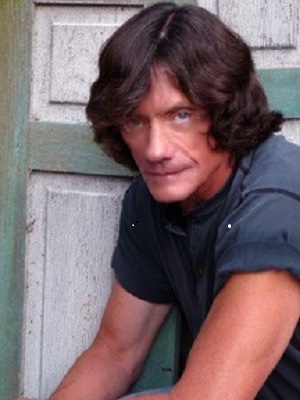
Ron Shannon discovered a passion for storytelling at a very young age: while listening to his teacher read the Charles Dickens’ classic A Christmas Carol to the overly-excited members of his sixth grade class. Later, he went on to study at Rutgers University in New Brunswick, New Jersey and graduated with the unlikely degree combinations of accounting and English. Recently he completed his Master of Fine Arts in Writing Popular Fiction at Seton Hill University in Greensburg, Pennsylvania. Ron lives, daydreams, and writes at the New Jersey shore.

 Gina N. Anderson