I Accidentally Created a Fictional Universe

What Writing My Own Stories Revealed About Creative Worldbuilding

Now that fans of the hit IT: Welcome to Derry TV show are discovering the ties between Stephen King’s various TV and film adaptations of his novels, I think I have a deeper insight into how writers build interconnected story universes. 

I wrote a short story called Delphine the Hag and the main character was part of this family of supernaturally gifted women. I also wrote a short story called Healing Magick with another main character who went to her grandmother’s home for healing. I never sold that story, but it ended up giving me the idea for merging all of the worlds together for a TV pilot. 

AI-generated TV series poster

I thought, what if the young woman in Delphine the Hag and the woman in Healing Magick were related and their grandmother was looking to pass down her magic to one of her granddaughters? I started pulling together all kinds of details about how the magic worked, who the villains were, what the family dynamics were, and ended up with a supernatural TV drama, The Bryant Women

Needless to say, I freaking loved dreaming up my series bible for this TV pilot. I didn’t want to spread it out in separate short stories, so I merged it all together. And I keep wanting to go back to that well and think of other spinoff ideas, but I’m not there yet.

So, for me, I can see how Stephen King, who published The Shining first in 1977, then IT (1986), and Doctor Sleep (2013), finds it endlessly fascinating to keep wanting to go back to that world he created. I totally get it.

And in preparing to write this blog post, I thought about all of the other book series that I love. This is what drives fans wild, seeing how they can piece together Easter eggs from one book to another. You saw that happen when book fans patiently answered questions from TV-first fans about Stephen King’s books that were the source materials for IT: Welcome to Derry. It was an amazing one-week post-mortem of who, what, when, and why.

In addition to Stephen King, I also really enjoy book series by other fiction authors:

  • George R.R. Martin’s Game of Thrones fantasy universe
  • N.K. Jemisin is a prolific speculative fiction author and she’s written multiple book series. My favorites are: The Broken Earth, The Inheritance Trilogy, and the Dreamblood series.
  • Kresley Cole’s paranormal romance book series, Immortals After Dark, and her young adult fantasy series, The Arcana Chronicles
  • Laini Taylor’s Daughter of Smoke and Bone fantasy series
  • Karen Marie Moning fantasy romance Fever series set in Ireland
  • Daniel Jose Older is a Latinx author who has a few young adult fantasy series under his belt that you should check out. He also wrote the novelization of a few Star Wars stories.
  • Finally, although he doesn’t write any universes, this author has written really good science fiction novels about living in space. I can’t forget Andy Weir’s The Martian.

In addition to being a film buff (I did not go to film school, but I have an MFA in Creative Writing), I’m also a huge book nerd. Definitely find me on Goodreads.com and friend me there. I listen to more audiobooks these days, but I also indulge in turning pages every now and then.

Eventually, I’m going to write book reviews on this site, but I’m not there yet. I want to reserve my time for writing about writing and actually getting my projects out there first.

Anyway, please feel free to post your book recommendations in the comments.
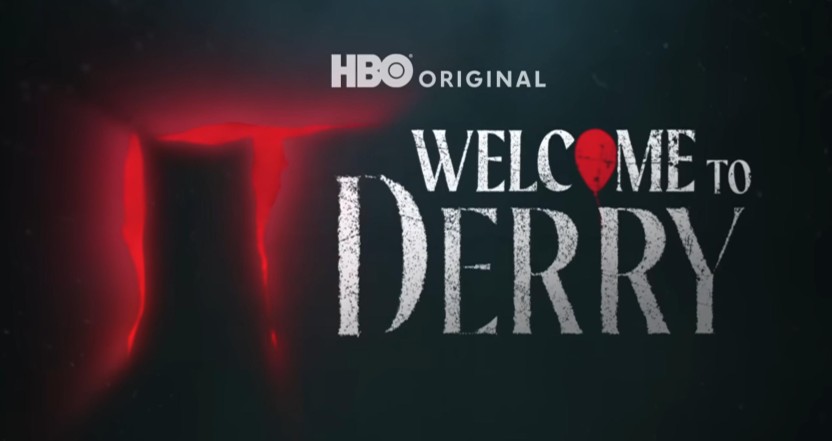
Welcome Back to Derry: How the ‘IT’ Prequel Series Unravels Derry’s Dark Origins 

I had to give myself a few days to process the IT: Welcome to Derry TV series finale on HBOMax. As a fan of Stephen King and his Shining universe (The Shining, IT films, and Doctor Sleep), I was super excited to see that there would be a TV series so that we could spend more time exploring some of the backstory. 

I was pleasantly surprised that Bill Skarsgard came back to reprise his role as Pennywise. I’m not sure the show would survive without his quirky yet terrifying rendition of the this cosmic entity. I also thought that the TV series was a great way to answer fans’ questions about how the Shining works, learn more about Dick Holleronn’s past, and BONUS: see the ancestors of the kids who gave Pennywise an eternal sleep… or so we hope is the case.

Here’s my take on some of the elements of the series that really worked for me:

Time as a Setting

The show could’ve started anywhere on Pennywise’s 27-year cycle timeline, but they chose 1962, a period when America was undergoing significant turmoil. The Civil Rights Movement was in full swing, massive changes in society were met with racial violence, and so many other “fearful” things were happening. Pennywise feeds on fear and it makes sense that he would’ve enjoyed this era.

Welcome to Derry follows the 1962 version of The Losers Club (more on that later): Lily, Ronnie, Will, Marge and Rich. The catalyst of the show begins when a young boy disappears and his friends are violently murdered by a mutant baby in a movie theater while searching for him.  Police suspect Ronnie’s father, a Black man, of the murders, but Lily and Ronnie were there and they know that something more supernatural happened. But they can’t tell the adults because who would believe them?

Throughout the season, Ronnie’s dad is captured, escapes, and then he’s found again by a group of vigilante white male citizens of Derry that are convinced that he murdered the town’s kids. The penultimate episode features the inevitable clash between this group and Black military servicemen enjoying themselves in “The Black Spot,” a local juke joint. Pennywise shows up in the middle of the skirmish and has his big “meal” of fear after The Black Spot is set on fire with dozens of people and The Losers inside. 

Luckily, Hallorann is there and a benevolent Native American warrior spirit helps them escape the blaze but not before Pennywise gorges himself on the fear of those trying to survive the fire and the bullets. By the end of this episode, you can see exactly why the 60s was the perfect time for this New England town’s reckoning with Pennywise’s return. 

Origin Stories Beget Origin Stories

  • The TV series allowed the writers to explore some of the origins of The Losers featured in the reboot of the IT films (Chapters One and Two). By the last episode, we learn that Will is Mike Hanlon’s father; Marge (a later member of the 1962 Losers Club) is Richie Tozier’s mother and that he’s also named after Rich “the Knight” Santos; and that Ingrid is the old woman in the rebooted films who attacks adult Beverly Marsh in the IT: Chapter Two film.
  • The show also features an origin story of the Native American that trapped Pennywise on the outskirts of the town of Derry, and the weapons that could destroy him or slow him down. The shards or “pillars” come from his original cosmic star that he fell to Earth in when he first landed in what is now Derry.
  • We actually get to see just how powerful Dick Hallarann’s psychic abilities are (who we were introduced to back in The Shining film), and how much control he can exert over Pennywise through his psychic manipulation, even if for a short time. Many fans have asked for a full-on Hallorann spinoff series.
  • Welcome to Derry also shows us the original Pennywise aka Bob Gray, a clown whose identity he took on because he saw how kids (his favorite victims) responded to him like a rock star. The series has been renewed for two more seasons and it will go back further in time to 1935 and then 1908, each time when Pennywise awakens from his 27-year slumber.
  • We also learn that Pennywise perceives time differently than us mortals and he sometimes gets confused between the past, present, and future. Series showrunner, Andy Muschietti, alludes to this in interviews, so I look forward to that being a part of the lore when they go back in time in the next two seasons. 

They really packed so much into this eight-episode season, but it was very satisfying for fans of the books and the TV/film universe. We got to see how interconnected Stephen King’s universe is, while also diving deep into how a previous generation has battled him. The ending of the season was very satisfying and throughout the whole series, I felt deeply for those children and their secret battle to stay safe and sane, while the adults struggled to process who or what  Pennywise was. In the end, the kids saved the day and it’s sad to know that their offspring will face his evil once again in a future 27-year cycle. 

Creativity Cycles

I don’t know about you, but the guilt I feel about not having the energy to write or edit/revise my work ebbs and flows, depending on the day. It’s after a holiday week as I write this, and I am thinking about writing, but I haven’t had the time to do so while visiting family. So, I’m writing about writing instead of creating or revising a creative project and that’s totally fine with me. It’s like riding my bike on the runway and taking in the pre-departure peace and calm instead of taking off on a plane.

I’m here to tell you that it’s perfectly fine to write when you feel energetically ready to do so. Unless you have a clear deadline, it’s best not to force creativity. If you’re truly in your creative period, then you’ll be inspired by almost anything when you are ready to write. I get inspired by my (sleep) dreams. Many of them are like little movies with a clear plot, beginning, middle, and end. My dreams usually form as high concept action, fantasy, or sci-fi films. That’s how much I eat, sleep, and consume those genres. 

Back to creativity cycles. Of all my years of writing, I’ve always had spurts of creativity when I focus on a project. However, when I take a break, I truly take a break. I don’t immediately go work on another project, unless there’s a deadline. 

One of the most invaluable pieces of advice that I came across was from Stephen King’s book, On Writing: A Memoir of the Craft (2000), where he said that he steps away from a project that he’s been working on for about six weeks. When he comes back to his draft, he can revise it with fresh eyes. (He also said that he writes two drafts and a polish as his revision process).

I’ve found this to be true in my own writing. I started out writing fiction, my novel Worlds Apart (unpublished), and I totally resonate with King’s advice. Now that I’m a screenwriter, I think that six weeks is too long in between revisions. I like to churn out screenplays in short spurts so that I keep up the momentum of the story, especially my TV pilot projects, because those stories need to introduce the protagonist and the journey they’re going on, and establish worldbuilding.

But don’t take my or Stephen King’s word for it, I found a few articles that explain these creativity cycles. Some of the articles were more geared toward creative problem-solving (STEM fields, for example), but I found one that is specific to creatives by Dana Wood at The Integrative Counsel called, “The Gears of Creativity: Creative Cycles Explored.”

In the article, the creative cycle goes: 

  1. Preparation: This stage or “gear” is pretty self-explanatory, but for a screenwriter and author, it’s the stage when you’re doing your research. If you’re a worldbuilder like me, you might be looking up real-world settings or imagery of distant worlds, or finding inspiration from your sleep dreams and seeing if it already exists in the real world. 
  2. Incubation & Insight: This gear is where you might start thinking about what you want to do. For the trained or educated writer, you may have been asked to declare in school if you’re a “pantser” or a “plotter,” meaning that you either write by the seat of your pants, or you start with an outline first. If you start with an idea, you might be thinking: TV series, short, or feature film? As a plotter, this phase of development is a big deal. 
  3. Evaluation: This gear asks you to evaluate whether this project is worth advancing to execution. Let’s say you have three story ideas and you need to choose one, perhaps, you want to enter a film festival or screenwriting competition and you need to write something that would do well for that audience. 
  4. Integration, Imagination & Iteration: This gear is when you actually sit down and produce without fear. I highly recommend you go from Preparation to Integration and Iteration in a pretty short span of time. You need to create when you feel that creation energy take over you so that you don’t lose the momentum.
  5. Upleveling: Now we’re circling back to Stephen King’s advice. After you’ve created your masterpiece and you’ve taken some time away from it, revise and polish your work. Don’t be afraid to do it, but make sure you’re not skipping this step before sharing your work with others. 

Hopefully, this post gives you some relief from beating yourself over the head for taking the holidays off from writing. When your creativity feels like work, it can make you think that you’re blocked, but as you can see, creativity ebbs and flows. However, if you develop a process, it can help you feel like you have some type of structure to complete your work. And with that, you’re totally winning. 

Drop your writing advice in the comments, on how you stimulate your creativity or how you take breaks from writing. What’s your process?