Creativity Cycles

I don’t know about you, but the guilt I feel about not having the energy to write or edit/revise my work ebbs and flows, depending on the day. It’s after a holiday week as I write this, and I am thinking about writing, but I haven’t had the time to do so while visiting family. So, I’m writing about writing instead of creating or revising a creative project and that’s totally fine with me. It’s like riding my bike on the runway and taking in the pre-departure peace and calm instead of taking off on a plane.

I’m here to tell you that it’s perfectly fine to write when you feel energetically ready to do so. Unless you have a clear deadline, it’s best not to force creativity. If you’re truly in your creative period, then you’ll be inspired by almost anything when you are ready to write. I get inspired by my (sleep) dreams. Many of them are like little movies with a clear plot, beginning, middle, and end. My dreams usually form as high concept action, fantasy, or sci-fi films. That’s how much I eat, sleep, and consume those genres. 

Back to creativity cycles. Of all my years of writing, I’ve always had spurts of creativity when I focus on a project. However, when I take a break, I truly take a break. I don’t immediately go work on another project, unless there’s a deadline. 

One of the most invaluable pieces of advice that I came across was from Stephen King’s book, On Writing: A Memoir of the Craft (2000), where he said that he steps away from a project that he’s been working on for about six weeks. When he comes back to his draft, he can revise it with fresh eyes. (He also said that he writes two drafts and a polish as his revision process).

I’ve found this to be true in my own writing. I started out writing fiction, my novel Worlds Apart (unpublished), and I totally resonate with King’s advice. Now that I’m a screenwriter, I think that six weeks is too long in between revisions. I like to churn out screenplays in short spurts so that I keep up the momentum of the story, especially my TV pilot projects, because those stories need to introduce the protagonist and the journey they’re going on, and establish worldbuilding.

But don’t take my or Stephen King’s word for it, I found a few articles that explain these creativity cycles. Some of the articles were more geared toward creative problem-solving (STEM fields, for example), but I found one that is specific to creatives by Dana Wood at The Integrative Counsel called, “The Gears of Creativity: Creative Cycles Explored.”

In the article, the creative cycle goes: 

  1. Preparation: This stage or “gear” is pretty self-explanatory, but for a screenwriter and author, it’s the stage when you’re doing your research. If you’re a worldbuilder like me, you might be looking up real-world settings or imagery of distant worlds, or finding inspiration from your sleep dreams and seeing if it already exists in the real world. 
  2. Incubation & Insight: This gear is where you might start thinking about what you want to do. For the trained or educated writer, you may have been asked to declare in school if you’re a “pantser” or a “plotter,” meaning that you either write by the seat of your pants, or you start with an outline first. If you start with an idea, you might be thinking: TV series, short, or feature film? As a plotter, this phase of development is a big deal. 
  3. Evaluation: This gear asks you to evaluate whether this project is worth advancing to execution. Let’s say you have three story ideas and you need to choose one, perhaps, you want to enter a film festival or screenwriting competition and you need to write something that would do well for that audience. 
  4. Integration, Imagination & Iteration: This gear is when you actually sit down and produce without fear. I highly recommend you go from Preparation to Integration and Iteration in a pretty short span of time. You need to create when you feel that creation energy take over you so that you don’t lose the momentum.
  5. Upleveling: Now we’re circling back to Stephen King’s advice. After you’ve created your masterpiece and you’ve taken some time away from it, revise and polish your work. Don’t be afraid to do it, but make sure you’re not skipping this step before sharing your work with others. 

Hopefully, this post gives you some relief from beating yourself over the head for taking the holidays off from writing. When your creativity feels like work, it can make you think that you’re blocked, but as you can see, creativity ebbs and flows. However, if you develop a process, it can help you feel like you have some type of structure to complete your work. And with that, you’re totally winning. 

Drop your writing advice in the comments, on how you stimulate your creativity or how you take breaks from writing. What’s your process?

Exciting Screenplay News!

Update: My TV pilot made it to the semi-finals.

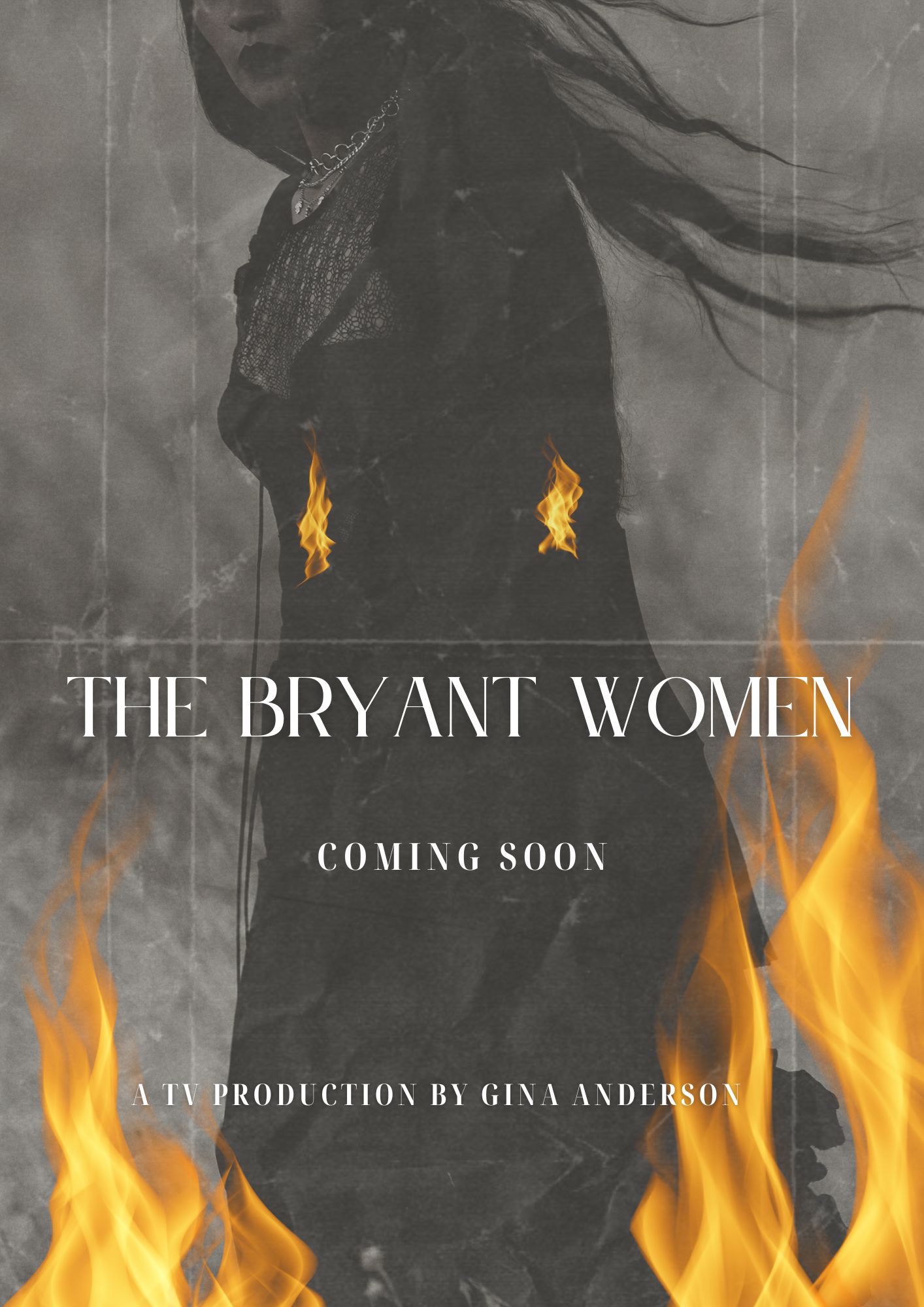
My TV pilot The Bryant Women placed in the Quarterfinals in the Outstanding Screenplays TV Pilot Competition! This script has been a labor of love, born from my desire to showcase the magic that already exists in the underrepresented communities of my home state, South Carolina. I simply gave it a supernatural drama edge. I’m thrilled to see my work recognized among so many talented storytellers. Onward to the next round!

This was the first script I’ve ever written, but not the first time that I’ve placed in competitions for this project. I’ve made the Quarterfinals in the Santa Barbara International Screenplay Awards and Semi-Finalist in the Wiki: The World’s Fastest Screenplay Contest.

Scroll all the way down for a poster for the TV show that I hope to see go into production someday.

The Bryant Women poster

Excellent Analysis of Self-Publishing Options

Some of Your Screenwriting Resources Are Shutting Down

In August 2025, several of your favorite screenwriting platforms and resources will no longer be available.

In the last year, I’ve entered several screenwriting competitions, mostly through the platform FilmFreeway. Recently, I’ve used Coverfly for two competitions that are currently ongoing. Today, I received a notification that Coverfly is going offline on August 1st. Meanwhile, two of the competitions I entered won’t issue the next round of announcements until after that date.

Upon further research, I found that a few other screenwriting resources will also be shutting down: ScreenCraft and The Script Lab. It sounds like the industry is looking to consolidate a lot of these competition platforms. I can appreciate that since it is often time-consuming to track competition submissions on multiple platforms.

Luckily, most of my competition entries are on the surviving competition platform FilmFreeway. However, in Reddit conversations around this topic, writers found it convenient to have all of their competition submissions and placements in one place, such as with Coverfly.

Coverfly does give users the option to export their data. It’s very easy to do, so take advantage of that option now so that you don’t lose information from competitions that you’ve entered.

What other screenwriting resources have you used that have gone away?

Creativity x Career Expertise: Use Your Professional Past to Build Your Future

If my career up to this point has taught me anything, it’s that you can and should use every bit of personal and professional experience you have toward your career path as a creative and professional writer. 

In the past, I would’ve shrugged off these experiences as part of a winding road that I hoped would make sense to a future employer whenever I was on the job hunt. Now I look at them as breadcrumbs that led me to where I’m headed now in my creative career. How did it all start?

I’ve spent the last 15+ (I stopped counting) years as a professional communicator and public affairs specialist. The core skills in this profession range from being able to write compelling content, such as press releases, articles, and briefings for the media and executives. 

Ten years ago, I received my Master of Fine Arts degree in Writing Popular Fiction, which is where I learned about writing genre fiction (sci-fi, fantasy, horror, romance, etc.) and wrote a thesis novel for the young adult audience. This experience taught me about deciding which feedback to act on from critique sessions, working with professional author mentors, and pitching to the publishing industry. 

After graduation, I also worked with my alumni association on our annual writing workshop as the guest liaison, where I invited authors, literary agents, and editors to participate. I also personally guided them on the cozy Hogwarts-style campus and throughout their stay in our sleepy college town.

I was surprised by how approachable and willing many of these professionals were when it came down to giving back to the writing community. Some of them offered to read the workshop participants’ manuscripts, and many simply listened to their pitches and provided feedback. Some people got representation from their novels, but many of the participants simply appreciated the opportunity to pitch in a friendly setting as opposed to a big conference. 

I’ve had rich cross-cultural experiences that expanded my knowledge of various cultures. I studied abroad in Russia, taught English in Japan, and worked with New Zealanders and Maori for a few years as a public affairs and events manager. 

There is a depth of knowledge about the language and cultures that I wouldn’t have known by just Googling for information. I feel so fortunate to have had these opportunities to make some deep and enriching connections with the people that I worked with. Some of them are still lifelong friends.

In the last year, I’ve been preparing myself for a new career as a screenwriter in the film and television industry. I’ve taken screenwriting classes, written two screenplays for TV and film, and entered contests. 

Looking at all of these experiences, you might think that they have zero connection to each other, but that’s not true. I’m the connection. I have to see how I can use my international, education, cultural, and communications background to serve me going forward. 

Here are some tips and takeaways that I think might be helpful to you too:

  • Never turn down an opportunity to expand your skills. Does the job as a telemarketer sound like a drag? Maybe it’s actually preparing you for pitching your book to the publishing industry.
  • Don’t be so rigid in your professional aspirations that you only take jobs that are safe. This one is pretty self-explanatory, but if you’re a professional communicator and don’t dip your toes into the “dark side” of marketing, you might be missing out. While these two career paths might require similar skillsets, the approaches to reaching audiences are quite different. Marketing skills is yet another way to pitch your stories, products, or ideas.
  • Take on volunteer or internship positions to break into your new industry. If someone doesn’t want to hire you because you don’t have years of experience or education in a certain area, take on roles that are lower barrier to entry, e.g. unpaid or part-time paid positions. 

How has it been going for me so far? Pretty good. I’ve placed in a few of the screenplay contests that I’ve entered, but no monetary rewards thus far, just the joy of knowing that I did that! 

I’ve published three short stories in anthologies in the last two years and got paid a small amount for one of the publishing contracts. I would’ve published more, but that’s just because I haven’t submitted stories in a while. Right now, I’m just focused on submitting screenplays over short stories, but I’ll get back to it! Imagine how much I can accomplish if I put all of my energy into it. 

The moral of the story is that you truly should be mining your experiences for how you can apply what you’ve learned in your personal and professional life to your new career path. Make a simple tree of knowledge to show the experience and compare it to what is needed to enter the industry that you’re interested in.

My tree of knowledge might look like me using my communications skills to write blogs and articles about my writing projects and promoting it on social media and podcasts. It might mean that I don’t have to pay someone to do these things, which ultimately saves me money.

It might also look like me using my media pitching skills to pitch my novel and screenplays to agents and managers. The sky is truly the limit. 

So, don’t see your past as a maze of bill-paying jobs, see them as the building blocks to your future. Best of luck to you!
A New Story in Print!

My story “Delphine the Hag” is published in CultureCult Magazine’s horror anthology, “Memento Mori: Rest in Peace.” While this is not my first story to be published, it is the first one in print!

Please support my writing career and purchase a print copy today. Send the copy to me, and I’ll sign it and ship it back to you. Purchase a print copy here.

Looking For a Genre Fiction Workshop?

The 2016 In Your Write Mind (IYWM) workshop is hosted by the Writing Popular Fiction program alumni at Seton Hill University in Greensburg, PA. The genre fiction workshop is a unique opportunity for  writers to gather together on the beautiful campus in western Pennsylvania and learn from publishing industry professionals and participate in fiction-writing craft sessions.
The workshop is from June 24 – 26, 2016.  Guests of honor include:
  • Guest Agent Kimberly Brower, The Rebecca Friedman Literary Agency
  • Guest Agent Eric Ruben, The Ruben Agency
  • Guest Editor Diana M. Pho, Tor Books
  • Guest Author Daniel José Older

The special guests will be available for pitch sessions, lead workshops and participate on a panel discussion for Q&A about the publishing world.

The workshop planners are hosting social events after the daily program, including a book signing and reading, and a wine social where workshop attendees are free to dress up in “Trope Your Genre”-themed costumes.

Register today at: https://alumni.setonhill.edu/wpf2016

WPF-2016-Save-the-Date-web