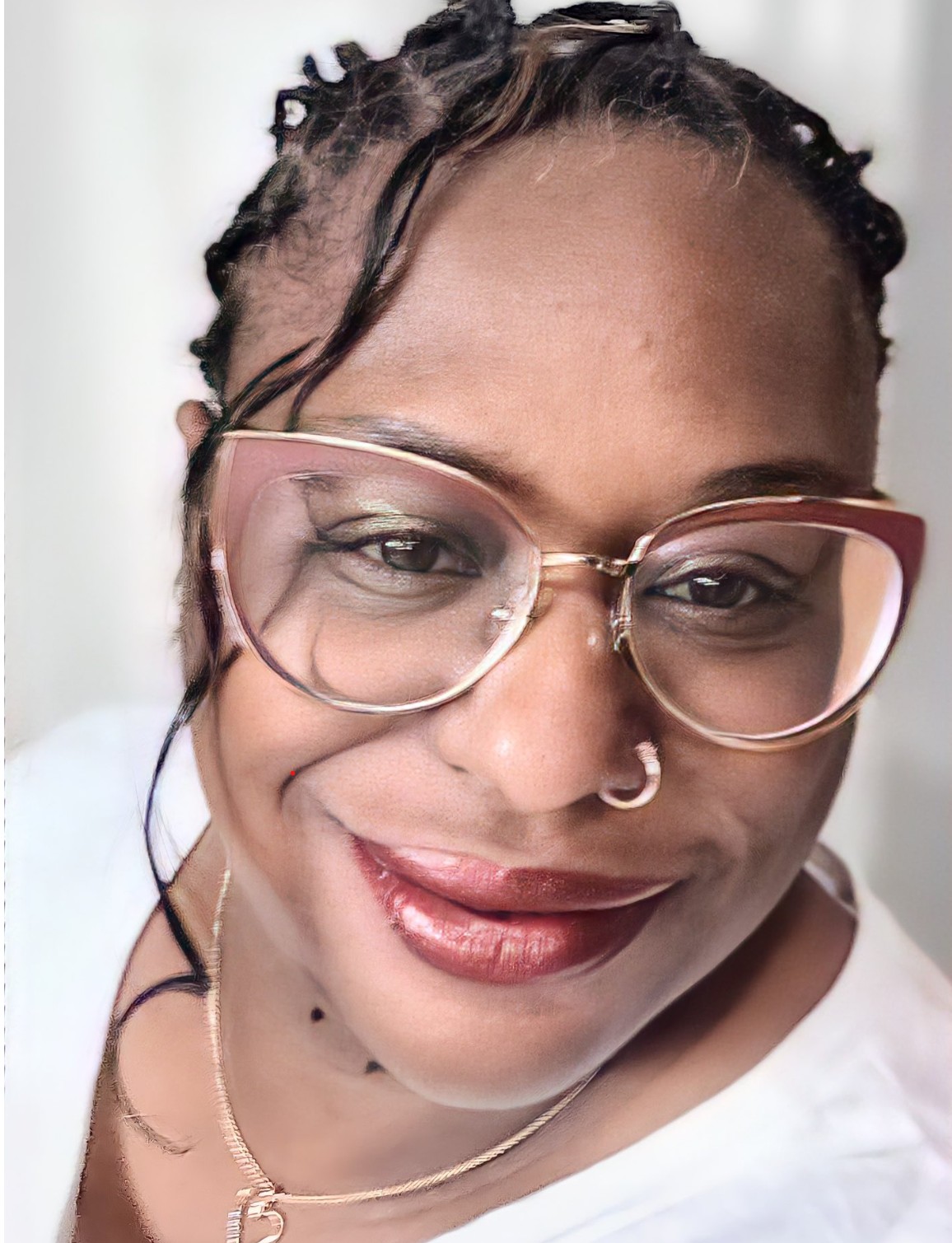
I met Rhonda Jackson Garcia during one of our residencies at Seton Hill University in Greensburg, Pennsylvania. We were both in the school’s Writing Popular Fiction low-residency MFA programs. We were part of a delightful collection of misfits who loved reading and writing genre fiction: romance, horror, science fiction, mystery/thriller, and fantasy. We opted out of the literary track offered by many other graduate schools and leaned into our shared interest in genre fiction, which also happens to be popular fiction.
Rhonda and I have stayed in touch over the years, and I’ve seen her writing career evolve to include teaching and academic writing, while also being a full-time wife and mother. That’s not an easy feat. So, I was especially pleased to see her receive the Bram Stoker Award for Superior Achievement in Short Fiction for a story in her latest short story collection.
I recently spoke with Jackson Garcia about her life and career. I hope readers will gain insight into her perspective on the current horror landscape, as well as a sense of the journey that has shaped her as a writer, educator, and scholar.
1. Tell us about your journey as a writer. When did you take it seriously as a career choice? Has your upbringing and/or environment inspired you and your stories?
So, I grew up in a reading household. We didn’t have a lot; we were very poor, but we always seemed to have books everywhere, and it was a long time before I realized that was actually a privilege to have books and to have parents who thought that reading was an important thing to do. Now, my Daddy read a lot of horror and science fiction; Mama read a lot of romance, and being Southern Baptist, they decided we couldn’t read the love stuff, but they didn’t think to hide away the horror and sci-fi stuff.
And so, I’m this little kid reading Stephen King and John Saul and all this stuff that I could hardly understand, but I could understand that there were monsters, and I was for it.
So, I wrote a lot of fan fiction, a lot of boy band fan fiction, back in middle school. I had my first professional sale when I was 17, still in high school, and I finally got hold of those Confessions magazines that Mama didn’t want me to read, so I sold a poem to one of them. My first few sales were for them, so I started out as a romance writer. I had quite a few stories; those were uncredited. They don’t credit those stories, but I’m like, I have copies of the magazines. I really wrote those.
My Mama was also big on having a backup plan. So, she says, “I understand that you may want to write for a living, but you can do this other stuff, learn this other stuff to kind of back up there.” And I don’t think that it was until much later, when I went to Seton Hill, that I thought that it was something that I could do. I mean, I was already a housewife at that time; my kids were younger, and so I was at home with them. I thought, oh my gosh, I would just go crazy if all I’m supposed to do is housework. Is that all I’m supposed to do? Especially once they went to school. I was like, what am I supposed to do? I need something else. It wasn’t until then that I thought this might actually be a thing that you can do. By then, I had self-published my first romance novel, but after that I thought, you don’t have to do that; you can get other people to do those things.
The great thing about Seton Hill was that I could explore both, so I came out with an official thesis that was a romance novel. I learned so much about horror writing and writing in general. I was able to do all of that there. I will forever be grateful to that crew at Seton Hill.
2. We both graduated from Seton Hill University’s Writing Popular Fiction program. You’ve had great success as an author, professor, and academic essayist. Has that program benefited your career? Do you recommend writers go to grad school to advance their writing careers?
I think it depends on what you’re trying to do. For me, I had been writing for a long time. I felt like I’d hit a wall with everything that I knew, so I was limited in what I knew how to do. I learned how to self-publish back when we didn’t have print-on-demand, and it was a real slog; it was terrifying.
It was really, really, really hard for me. So, one reason I wanted to go to grad school was to learn what I didn’t know. And especially Seton Hill, because there was a toss-up between Seton Hill and a grad program in Vermont that I can’t think of right off the top of my head. They were the two I was really looking at that had low-residency programs that would let me be with my family, because I think that’s really important, too.
There was no way that I could spend that kind of time away from home. But I think it depends on what you’re trying to learn. For me, it really filled in those knowledge gaps that I had, and there were some really big gaps, and what I needed was to be surrounded by other working writers so that I could see how this was done. Some of the teachers taught me things that I don’t think they ever knew they were teaching. For instance, Dr. Mike Arnzen was the first time I’d ever seen an actual horror academic.
So, I thought, “This is something that I could do? This is something that people can do?” I don’t know if I thought I could do it at that time, but I met a black horror academic, who was another woman, and I thought, “Oh, we can do that too.” I thought it was just something that Arnzen was just doing, because he just does stuff, but I don’t know that he knew that he was teaching me.
Watching them and the working writers, I thought, “This is something that I could actually do.” Also, I couldn’t teach in college without an MFA, so that was the second reason I went. I thought, “Well, if the writing thing doesn’t take off, at least I can get a job that’ll be flexible. I can still take care of the kids.”
I really think it depends on what you’re trying to do because you don’t technically learn to write in these programs. You learn other skills, and you improve your writing.
3. You write a lot about race, gender, and the way those identities intersect in horror. For horror fans who may not consider these topics when they consume the genre, whether in print or on screen, what takeaways would you like them to understand about your work and how people of color may resonate with what’s out there now?
I just saw a post on Threads by Sadie Hartman, who is known as Mother Horror, and she said something to the effect of – because I do want to credit her for this – she said something to the effect of: People from marginalized groups have a very unique talent for writing about horror. Read their work. I think that probably encapsulates how I feel about this: being a member of several marginalized groups is where those intersections come through. That’s when we talk about what these intersected personalities are, but the fact is, we have these voices that we can use that are hardly ever heard. I’m so excited that when you’re reading the book, it comes across as, for lack of any other word, I usually describe it as my writing as Blackety, black, black, black.
I am purposely writing with a Black audience in mind through the lens of Black experiences, and I think that when people don’t read work from people in marginalized groups or read these kinds of works, they miss out on so much nuance, and they miss out on a lot of ideas about things that they may not have ever considered to be creepy or things that they may not have considered to be scary because we all have monsters, but they are personalized, and we still all have them.
Gina: Oh, I love that. That is so perfect, because people might say, “Why can’t I just enjoy the story?” A lot of people who enjoyed the film Get Out may not acknowledge the fact that the story is about race, and it’s more than just about someone rich taking a Black body. It’s actually a lens, a symbolic representation of real fear. The film Sinners does the same thing. On the surface, it’s a vampire story, but it has so many layers that when African Americans watch it, we automatically get it; we don’t need anybody to tell us what it means. It’s like a lived experience on screen, and I think that’s why we get it. And it’s so important for people when they enjoy it. I feel like there needs to be some education around it. It needs to be some thought, deep thoughts around it. You know what I mean?
Rhonda: Yes, absolutely.
4. I write a lot about TV & film; what are your thoughts on the explosion of the horror genre in the last few years? I’m thinking of films like Sinners and Get Out, which embrace the themes you write about and elevate the conversation around race.
I’m excited about it. I’m hoping, with my fingers crossed, that means there will be more. Because it’s exactly like you say, these are things that are educational in a way for people who don’t understand these experiences, and I think that they’re teaching in such a way that makes people a little more comfortable. I think being able to have different storylines shows that Black experiences can be shown on screen and intertwined with things like monsters and serial killers. [The film] Ma was one of the recent movies that I absolutely loved that showed a side of Black motherhood, and [the film] Us did the same thing in showing what it’s like to be a Black mother.
What is it like to be a mother afraid that your children will be stolen? What is it like to be afraid that your kids will be sexually traumatized at school? How do you keep this from happening?
So yeah, I’m really hoping that means there’s a door open for more of these stories, because there are times when we have to get into the deep nitty-gritty of the stories. Sometimes I’m told that my writing can be a little vicious, and my answer is always, “It’s that way on purpose.” Because sometimes you have to pull the curtain all the way back. You have to actually show the horrors so that people understand that things were happening, especially when we talk about things that happened during slavery. There are always these conversations about, well, it wasn’t that bad. And I’m thinking it wasn’t that bad?
And what about the part where women were bred like animals in order to increase the inventory of slaves, and then you always get this kind of mouth-drop-open type of reaction that goes, “Oh, that happened?” Absolutely, that happened.
So now you understand forced births[GA1] , as we talk about it now, actually had other implications for enslaved women. So sometimes we have to educate, and we have to pull the curtain back on these horrors because for some people, they don’t understand it unless it’s right in their face, and unless it’s something they can actually draw a current comparison to directly.
Gina: Yeah, and I feel like every generation needs to have some story that puts the history of our country into perspective, because it’s not going to hit the same from the folks who grew up and actually had to live it. My mom remembers drinking out of a colored water fountain when she was young. She remembers, but the next generation may not understand that happened within their own mother’s lifetime, and so young stories need to come up at every generation to educate not just African American children, but also other American children who just didn’t grow up getting those stories.
5. What are some of your favorite TV shows & films that you feel are both entertaining and educational or impactful?
Some television shows I just rewatched with my daughters: IT: Welcome to Derry, and I thought that was so wonderful. I’m always looking for Black women in movies and TV series, and the way Ronnie Grogan and Charlotte Hanlon were drawn as characters was so wonderful. They were so feisty; they did not back down, even in the face of this murderous clown entity. Plus, it was set in the 60s, and it talks about things like how girls were supposed to behave, and how Ronnie was not; that’s why she ended up in detention. And how Charlotte came up from the South, bringing her activism to the North, because a lot of people don’t realize activism was still necessary. I think that it does a really good job of explaining those kinds of dynamics.
I also think that Lovecraft Country – it’s a couple of years old now, but it was a treasure trove of education and of Black female experiences, like, oh my goodness. I think about how it even talked about gender exploration in different ways. And so that’s really great.
I’m really big on mini-series. So, shows like The Fall of the House of Usher. I loved that it talked about family curses, families, and legacies, and how the rest of the family has to deal with it when leaders of families make promises and deals, and how that trickles down and affects the rest of the family. Also, I love Mike Flanagan and everything that he does. I think that he has a way of guiding these Black female characters that I can relate to.
And I’m thinking, “Gosh, this White director guy is doing all of this. This is great.” I mean, of course you have to give credit to the actors themselves, but the direction that they’re getting is thoughtful. This is nuanced. This isn’t a stereotype, and I really love his work.
6. Can you envision any of your stories on the screen? If so, which ones and why?
I feel like there are a lot, but right off the top of my head, I am absolutely in love with this historical horror story I wrote called “Betina.” It’s sort of an homage to Edgar Alan Poe’s story, “Berenice,” except that, of course, this is a Black woman; she is betrothed to her Black cousin, who owns slaves; her family owns slaves, and so she has a hard time with that. But she’s also finding herself upset that she’s being forced to marry; she’s being forced to carry children. And she’s like, I’m not going to ever do that, so I’m going to find a way to make sure that doesn’t happen.
What makes me want to see this story on screen is that we need stories where women can think their way out of these troubling situations. She figures out that her betrothed isn’t quite all there, and her life is in danger, so she decides to take matters into her own hands. I think that cinematically, historical horror stories are just so beautiful.
Gina: Yes, it is. I love it when people make horror anthologies because they include so many different stories from different communities, and that sounds like it would be great in a horror anthology. They should do more of that because you get a variety.
Rhonda: I hope so. When they did that first Horror Noire anthology, I was hoping it would be a series. I was hoping it would be a series because I thought, okay, it’s go time. Surely we can pitch after I talk to my agent because I have a few of them. But then we didn’t hear anything else after. I thought that was perfect, though I don’t understand why it hasn’t continued. For me, I have to learn the whole business. That’s how I write my stories. They tend to be very cinematic because they play that way in my head, so that’s the way they come out, you know?
Gina: For sure. I was just thinking about those creepy little children with white hair and pale eyes in one of your stories in your latest book.
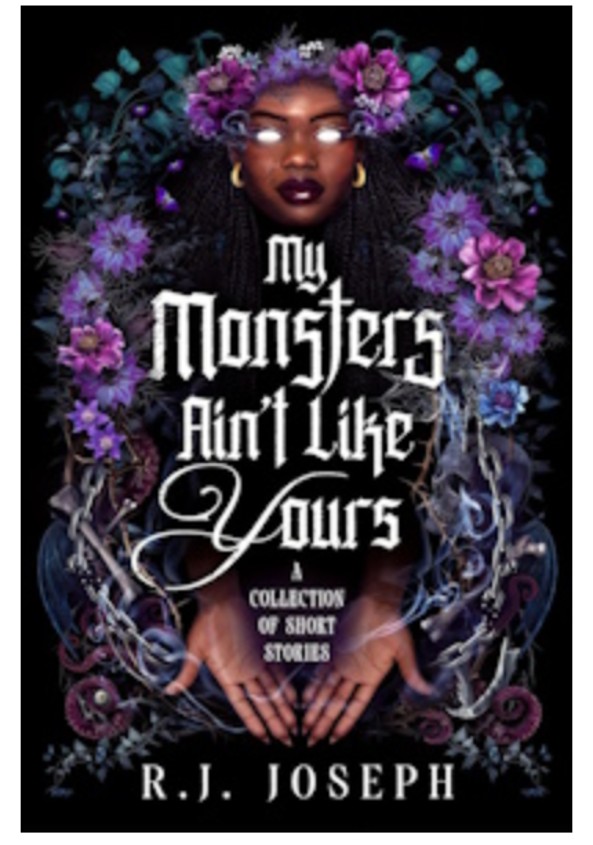
7. Now, let’s talk about your latest book, My Monsters Ain’t Like Yours, a collection of your short horror stories. It’s a fantastic read, and one of the stories, “Inheritance,” garnered you a Bram Stoker’s Award for Superior Achievement in Short Fiction. Congratulations! What makes this collection so special for you?
This one is special because when I wrote my first collection, that was one of those “let’s just see what happens kind of things.” It was pretty well received, and I thought, oh, so you mean that I can just do that? My whole writing career is full of revelations like that where I just go: “You mean I can just do that?” I can write these stories, and I don’t need permission. So, this one is special because I feel like I really leaned into what I understand now: my own writing voice.
I had a lot more confidence with this one. I felt sure in writing it and saying, “This is the way the stories need to be told.” I felt less trepidation about moving the stories in and out. I was pretty sure which ones needed to go into the collection, which ones needed to be withheld, and so there was a lot more confidence in this one. When you do a thing the first time, it’s a learning experience; you go through the learning curve. Then you come out the next time and put bumper pads on the sharp parts of the curve where you bumped your head last time. Then you come up with something better from what you learned from all these experiences. So, I think that’s what makes this one special. It’s just the confidence that I had in [myself]. This is something that I do; I do it well, and okay, let’s just put it out there kind of thing.
Gina: And I felt like you retained the Black female voice in a lot of the characters, but it was also literary, so we understood the voice, but it was a literary style of writing.
Rhonda: Blackness is not a monolith, and have they not met other women? I have a different experience of Blackness.
8. Fun Question: What other genre is your guilty pleasure? Mine is paranormal romance, and I’m not ashamed.
I love romance. I always consider myself as having one foot still in romancelandia, even though I haven’t read romance in years. The dark hole of horror just kind of sucked me in, and I’m staying so busy, which is a wonderful thing, but romance, oh my gosh, I keep saying one day I’ll get back to it. So, when I can pick up something to read, if it’s not a horror, it’s probably going to be romance.
Gina: Do you have an interest in a particular romance subgenre?
Rhonda: Oh, my gosh, I love paranormal romance. I’m totally down with Beauty and the Beast. I also love the whole idea of shapeshifters. And when you think about Dracula and some of the takes that they’ve done, I’m thinking about Coppalla’s take. So romantic and sexy, so I love the monster romances.
My husband listens to these books, and it shocked me the first time I heard him listening. I was like, “Is that werewolf romance?” He said, “I guess that’s what it is, but it’s the exciting stuff.” But that’s romance, honey. I love having to explain to him why this is the alpha [in a werewolf romance]. And what does he have to do to maintain his position?
Gina: He enjoyed it?
Rhonda: Yes, yes, it’s the werewolves. They love it. My husband is a truck driver, so he listens to these, and they’re his audiobooks.
Gina: So you’ve gotten him into it.
Rhonda: I’m just glad that he is listening to something, and that’s great because I need him to be paying attention.
9. Do you have some advice to share with new writers or people who want to take the next step toward fulfilling their dreams of becoming an author?
I do. I would say to just do it. The time is going to pass regardless. We’ll be 10 years from now whether you do it or not, so you may as well do it. I think I was 40 when I finished the program at Seton Hill, and I was always worried about whether or not I waited too late, but I realized that, for me, that was the time. That was when I was supposed to do it, but I know so many times we put things off because we think, “Oh, I’m busy, I have to do this now.” No, if you have an inkling to write and it does not leave you, you should do it. Just lean all the way in because none of the opportunities will open up until you actually step out there where they are.
Gina: Yeah, and rejection sometimes is just another way to keep honing your craft, or it just means that wasn’t the right audience for your work.
Rhonda: Exactly, so you just keep it moving. And you go to the next thing.
10. What are some other ways that readers/horror fans can learn more about your work? Are there any other upcoming projects that you’re allowed to share?
Sure, okay, so I will be at Long Dark House (a bookstore in Alexandria, Virginia) next month on the 21st doing an author signing. I’m really excited about that because they’re new, and I’m ready to go see what they have going on over there. That will be my last event for the year. Of course, when the year starts, I’ll talk about those things, but I haven’t started thinking about 2027 just yet. There’s stuff on my calendar; I’m just getting through this year.
I’m super excited about one project I’m working on that will be out in Q3 next year: my first nonfiction book, Mothers, Lovers and Others. It’s an examination of Black women in horror films. So, this whole thing has been leading toward that: talking about Black women in film, Black women in horror, and it’ll be published by Creature Publishing, and we are drafting as we speak.
Gina: I love it. We need more of our voices in this space to have these discussions, because it’s just the reality. This is reality. We have the voices we need to put it in academic work so others can study it. It’s not just part of discourse; it’s academic work people can cite.
I’m so proud of you and all that you’ve accomplished.
Rhonda: Oh, thank you so much, Gina. I appreciate it.
To learn more about Rhonda Jackson Garcia’s work, visit her website: https://rhondajacksonjoseph.com/bio/ , where you can also find links to purchase her books and merchandise.
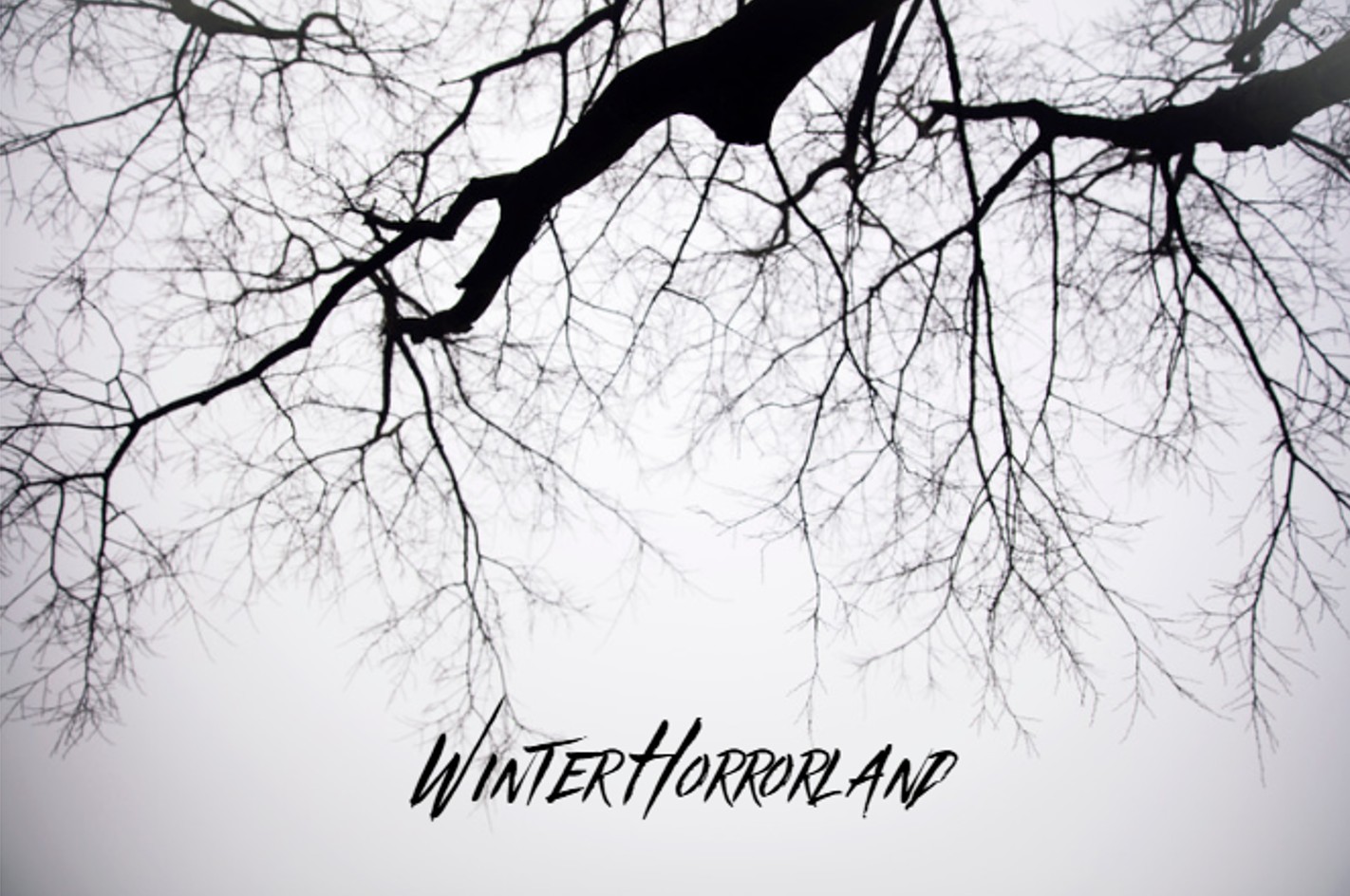
Jackson Garcia will also be a guest editor for the Still Life Fiction “Winter Horrorland” issue. The submission window is open until December 14, 2026.