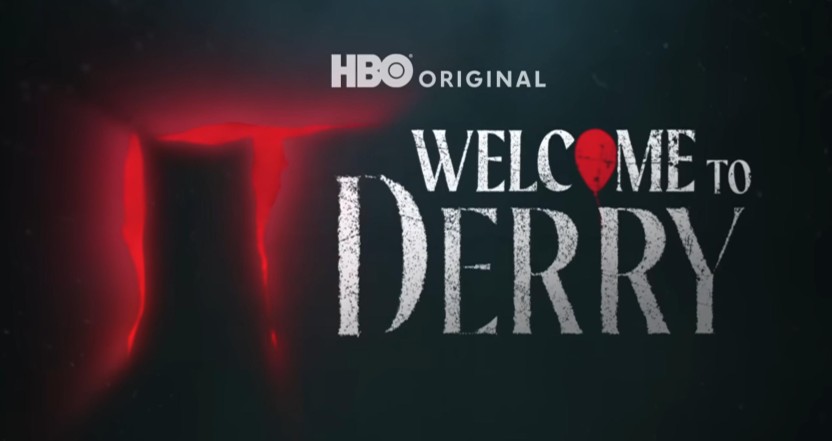
Welcome Back to Derry: How the ‘IT’ Prequel Series Unravels Derry’s Dark Origins 

I had to give myself a few days to process the IT: Welcome to Derry TV series finale on HBOMax. As a fan of Stephen King and his Shining universe (The Shining, IT films, and Doctor Sleep), I was super excited to see that there would be a TV series so that we could spend more time exploring some of the backstory. 

I was pleasantly surprised that Bill Skarsgard came back to reprise his role as Pennywise. I’m not sure the show would survive without his quirky yet terrifying rendition of the this cosmic entity. I also thought that the TV series was a great way to answer fans’ questions about how the Shining works, learn more about Dick Holleronn’s past, and BONUS: see the ancestors of the kids who gave Pennywise an eternal sleep… or so we hope is the case.

Here’s my take on some of the elements of the series that really worked for me:

Time as a Setting

The show could’ve started anywhere on Pennywise’s 27-year cycle timeline, but they chose 1962, a period when America was undergoing significant turmoil. The Civil Rights Movement was in full swing, massive changes in society were met with racial violence, and so many other “fearful” things were happening. Pennywise feeds on fear and it makes sense that he would’ve enjoyed this era.

Welcome to Derry follows the 1962 version of The Losers Club (more on that later): Lily, Ronnie, Will, Marge and Rich. The catalyst of the show begins when a young boy disappears and his friends are violently murdered by a mutant baby in a movie theater while searching for him.  Police suspect Ronnie’s father, a Black man, of the murders, but Lily and Ronnie were there and they know that something more supernatural happened. But they can’t tell the adults because who would believe them?

Throughout the season, Ronnie’s dad is captured, escapes, and then he’s found again by a group of vigilante white male citizens of Derry that are convinced that he murdered the town’s kids. The penultimate episode features the inevitable clash between this group and Black military servicemen enjoying themselves in “The Black Spot,” a local juke joint. Pennywise shows up in the middle of the skirmish and has his big “meal” of fear after The Black Spot is set on fire with dozens of people and The Losers inside. 

Luckily, Hallorann is there and a benevolent Native American warrior spirit helps them escape the blaze but not before Pennywise gorges himself on the fear of those trying to survive the fire and the bullets. By the end of this episode, you can see exactly why the 60s was the perfect time for this New England town’s reckoning with Pennywise’s return. 

Origin Stories Beget Origin Stories

  • The TV series allowed the writers to explore some of the origins of The Losers featured in the reboot of the IT films (Chapters One and Two). By the last episode, we learn that Will is Mike Hanlon’s father; Marge (a later member of the 1962 Losers Club) is Richie Tozier’s mother and that he’s also named after Rich “the Knight” Santos; and that Ingrid is the old woman in the rebooted films who attacks adult Beverly Marsh in the IT: Chapter Two film.
  • The show also features an origin story of the Native American that trapped Pennywise on the outskirts of the town of Derry, and the weapons that could destroy him or slow him down. The shards or “pillars” come from his original cosmic star that he fell to Earth in when he first landed in what is now Derry.
  • We actually get to see just how powerful Dick Hallarann’s psychic abilities are (who we were introduced to back in The Shining film), and how much control he can exert over Pennywise through his psychic manipulation, even if for a short time. Many fans have asked for a full-on Hallorann spinoff series.
  • Welcome to Derry also shows us the original Pennywise aka Bob Gray, a clown whose identity he took on because he saw how kids (his favorite victims) responded to him like a rock star. The series has been renewed for two more seasons and it will go back further in time to 1935 and then 1908, each time when Pennywise awakens from his 27-year slumber.
  • We also learn that Pennywise perceives time differently than us mortals and he sometimes gets confused between the past, present, and future. Series showrunner, Andy Muschietti, alludes to this in interviews, so I look forward to that being a part of the lore when they go back in time in the next two seasons. 

They really packed so much into this eight-episode season, but it was very satisfying for fans of the books and the TV/film universe. We got to see how interconnected Stephen King’s universe is, while also diving deep into how a previous generation has battled him. The ending of the season was very satisfying and throughout the whole series, I felt deeply for those children and their secret battle to stay safe and sane, while the adults struggled to process who or what  Pennywise was. In the end, the kids saved the day and it’s sad to know that their offspring will face his evil once again in a future 27-year cycle. 

I am a Judge for the FilmQuest Film Festival!

FilmQuest Film Festival official poster in collaboration with Bloody Disgusting. Artwork by @Tentaclesandteeth.

I just finished watching 17 feature films over a period of two weeks for this year’s FilmQuest Film Festival that will be held in Provo, Utah from Oct. 23-Nov. 1, 2025. 

This was my first time being a judge for a film festival, so I wasn’t sure how many films I could review in such a short time, but I made it through. 

As a longtime lover of genre films, this was a dream come true. I enjoy watching and writing genre TV, films, and fiction, so this experience gave me greater insight into the next steps after you’ve completed the project. For some filmmakers, that might look like festival submission, distribution, audience reception, and awards! Just being nominated must be something special for the film’s crew, cast, and producers.

FilmQuest is one of the top-rated genre film festivals in the world and boasts the distinction of being the #1 best reviewed film festival on FilmFreeway. If I were an independent genre filmmaker, this festival would be one of the main stops for me because I watched films that had large budgets, and some that were clearly made with heart and passion on small budgets. In this festival, they were all on the same playing field. 

Some of the genre films that I reviewed ranged from comedy musicals to gory horror to thrillers. I viewed them all and I can truly say that each one stood out in their own way. There were a handful of thought-provoking international films as well, both in English and other languages. 

Not only did I rank the films, but also nominations for other categories, such as: Best Actress, Actor, Sound, Direction, etc. I actually found this the most difficult to rank these categories because some of the nominees were good for different reasons. 

Some of the features that have stuck with me stood out for their creative story structure and pacing, out of this world plots, and some took visual storytelling to the next level. I was very pleasantly surprised by one of the comedies that made me laugh out loud (which is hard to do) and one that had a Tarantino flavor to it. I can definitely see a few of them hitting the theaters over the next year or on a streaming channel. They were just that good. 

You can find a link to all of the features and short films (which I did not judge), and other category nominees here. The festival is on its 12th run, and based on the notable actors that I saw in some of the films, you may see some familiar faces if you attend in person. Tickets are on sale on the FilmFreeway and festival website as of the writing of this blog post, but they’re selling out fast. 

Check out the 2025 Schedule to see which days you’d like to attend if you’re like me and can’t attend all of the days. There is also an option to view the films virtually if you want to get ahead of the festival and see what all of the films are about. 

It’s been such an honor to review these films and I hope that this is the first of many more opportunities in the future. Future filmmakers, screenwriters, and film lovers can participate in film festivals in other ways like volunteering. I’d love to learn more about how others stay connected to the film community.

Full disclosure, I submitted my own screenplay to this festival, but it was not selected. Being a judge was a great cancellation prize.

Book Review: Bram Stoker’s Dracula

In the spirit of Halloween weekend, here’s my review of Bram Stoker’s Dracula. 

The level of research and detail that went into Stoker’s portrayal of Count Dracula (aka Vlad the Impaler) took several yearsBram Stokers Dracula cover art and it shows. Stoker’s contemporaries, and a few predecessors, had written vampire novels with its own spin, but none were as popular as his. First of all, the story is written as a collection of letters, audio recordings, memos and diary entries giving the reader the vantage point of several characters: Mina, Lucy, Jonathan Harker, Dr. John Seward, and in some small degree, the infamous Dr. Van Helsing. Although I suspect Van Helsing’s character lacked a diary because Stoker probably thought being described through the eyes of his more passive characters added to the mystique of Van Helsing.

Dracula starts out with young Jonathan Harker being invited by the Count to his Castle in Transylvania to be his solicitor (lawyer), and to help him with purchasing property in England. At first the Count is most gracious and spends hours with Jonathan talking to him about his home country. The Count appears as an old aristocratic man who is interested in one last adventure outside of his home country, but later the reader discovers, through Jonathan, that “the old man has grown young!” Unfortunately for Jonathan, things take a turn for the strange when he realizes that all of the doors in the castle are locked, and he is restricted to his bedroom. Jonathan protests and threatens to leave the castle in the middle of the night, but realizes that the pack of wild wolves that howled every night outside the castle were controlled by the Count.

That brings us to Lucy and Mina, Jonathan’s fiancé back in the United Kingdom, who he tries desperately to get a correspondence to once he realizes he is a prisoner in the Count’s castle. Mina and Lucy are ladies-in-waiting. Mina had already been betrothed to Jonathan Harker before his trip east and Lucy, a fiery redhead, is promised to Arthur, but has two other engagement offers from Quincy and Dr. Seward. This completes the full circle of friends and love quadrangles that drive the “B Story” of Dracula. If it weren’t for these people who were loosely tied together by the two women and Dracula, then there wouldn’t be a Van Helsing to speak of.

It is wonderful to see how Stoker weaves these stories together to bring us to the ultimate climax. Interspersed throughout the story is the teased romance (ah ha! This is when chivalry was alive and well), and the strong female voices of Mina and Lucy, was the imminent threat that is Count Dracula who slowly makes his way to London with the intent to stalk the city and feed. Jonathan Harker knows this and leaves the reader on the edge of their seat wondering how they’ll make it back to London to warn everyone of Dracula’s evil plot! Oh, but that’s when one more brief letter to Mina by way of a Romanian nun (oh what surprises the letters hold!) about Jonathan’s terrible “condition” and that she is to come to him at once and be married.

Here’s where the “B story” takes a turn. One of the very important and central characters is infected, but you get insight into the turning through the character’s diary. Dots are connected and the fantastic world of London is turned upside down when all of the characters converge to track down and kill Dracula before he infects anymore. Throw in some choice settings like Dr. Seward’s insane asylum as a “safe haven” for Mina, and creepy graveyards and you’ve got a perfect picture of Gothic London.

It has been more than one hundred years since the initial printing of Dracula in 1897, and the book is still a classic. It has inspired so many vampire spin-off movies and television shows, created a foundation for bestselling authors like Anne Rice and Stephanie Meyer, and gone through several scholarly reviews. It is very rare that genre fiction stands the test of time, but when it does, it’s not because the conventions lasted, it’s because the writing was above average, and the story itself was unmatched.

Stoker’s mastery of story structure — flashing between POV characters via diary entries, letters, memos and newspaper clippings — was flawless. For the reader, the story was like a case that needed to be solved. Yes, yes, the reader knows how the story ends, but they still don’t know how. It’s an emotional roller coaster ride with each character as the reader puts some of the puzzle pieces together. Even though the reader knows that some characters have the answers to the questions in one character’s head, the reader is still waiting to see when they’d find out where the puzzle piece fits: who is talking to the man, Renfield, in the insane asylum? Who is his “master”? Yes, the reader knows it’s Count Dracula in the form of a mist or a pack of rats, but do we know why Renfield eats insects, wants a cat, or knows details about Mina that he shouldn’t know? Hmm….

This is the joy of reading Dracula one hundred years later. It is like unraveling the mystery of the early genre writer and reexamining the beloved horror story to discover insights into the makeup of a bestseller. Stoker will forever stand tall in the hall of both genre and literary fiction.