I Accidentally Created a Fictional Universe

What Writing My Own Stories Revealed About Creative Worldbuilding

Now that fans of the hit IT: Welcome to Derry TV show are discovering the ties between Stephen King’s various TV and film adaptations of his novels, I think I have a deeper insight into how writers build interconnected story universes. 

I wrote a short story called Delphine the Hag and the main character was part of this family of supernaturally gifted women. I also wrote a short story called Healing Magick with another main character who went to her grandmother’s home for healing. I never sold that story, but it ended up giving me the idea for merging all of the worlds together for a TV pilot. 

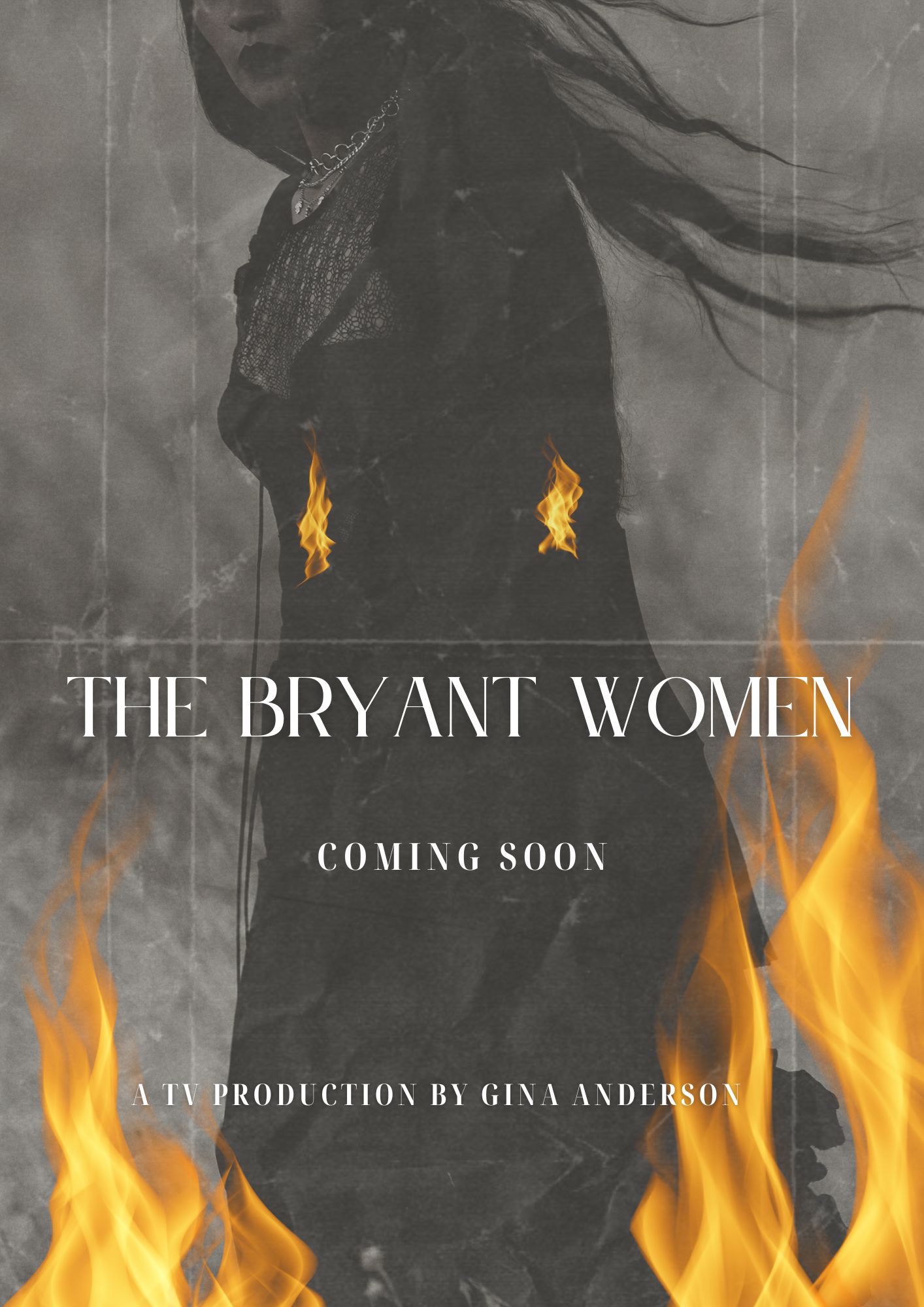
AI-generated TV series poster

I thought, what if the young woman in Delphine the Hag and the woman in Healing Magick were related and their grandmother was looking to pass down her magic to one of her granddaughters? I started pulling together all kinds of details about how the magic worked, who the villains were, what the family dynamics were, and ended up with a supernatural TV drama, The Bryant Women

Needless to say, I freaking loved dreaming up my series bible for this TV pilot. I didn’t want to spread it out in separate short stories, so I merged it all together. And I keep wanting to go back to that well and think of other spinoff ideas, but I’m not there yet.

So, for me, I can see how Stephen King, who published The Shining first in 1977, then IT (1986), and Doctor Sleep (2013), finds it endlessly fascinating to keep wanting to go back to that world he created. I totally get it.

And in preparing to write this blog post, I thought about all of the other book series that I love. This is what drives fans wild, seeing how they can piece together Easter eggs from one book to another. You saw that happen when book fans patiently answered questions from TV-first fans about Stephen King’s books that were the source materials for IT: Welcome to Derry. It was an amazing one-week post-mortem of who, what, when, and why.

In addition to Stephen King, I also really enjoy book series by other fiction authors:

  • George R.R. Martin’s Game of Thrones fantasy universe
  • N.K. Jemisin is a prolific speculative fiction author and she’s written multiple book series. My favorites are: The Broken Earth, The Inheritance Trilogy, and the Dreamblood series.
  • Kresley Cole’s paranormal romance book series, Immortals After Dark, and her young adult fantasy series, The Arcana Chronicles
  • Laini Taylor’s Daughter of Smoke and Bone fantasy series
  • Karen Marie Moning fantasy romance Fever series set in Ireland
  • Daniel Jose Older is a Latinx author who has a few young adult fantasy series under his belt that you should check out. He also wrote the novelization of a few Star Wars stories.
  • Finally, although he doesn’t write any universes, this author has written really good science fiction novels about living in space. I can’t forget Andy Weir’s The Martian.

In addition to being a film buff (I did not go to film school, but I have an MFA in Creative Writing), I’m also a huge book nerd. Definitely find me on Goodreads.com and friend me there. I listen to more audiobooks these days, but I also indulge in turning pages every now and then.

Eventually, I’m going to write book reviews on this site, but I’m not there yet. I want to reserve my time for writing about writing and actually getting my projects out there first.

Anyway, please feel free to post your book recommendations in the comments.
My Feature Script Placed in the Outstanding Screenplays Competition

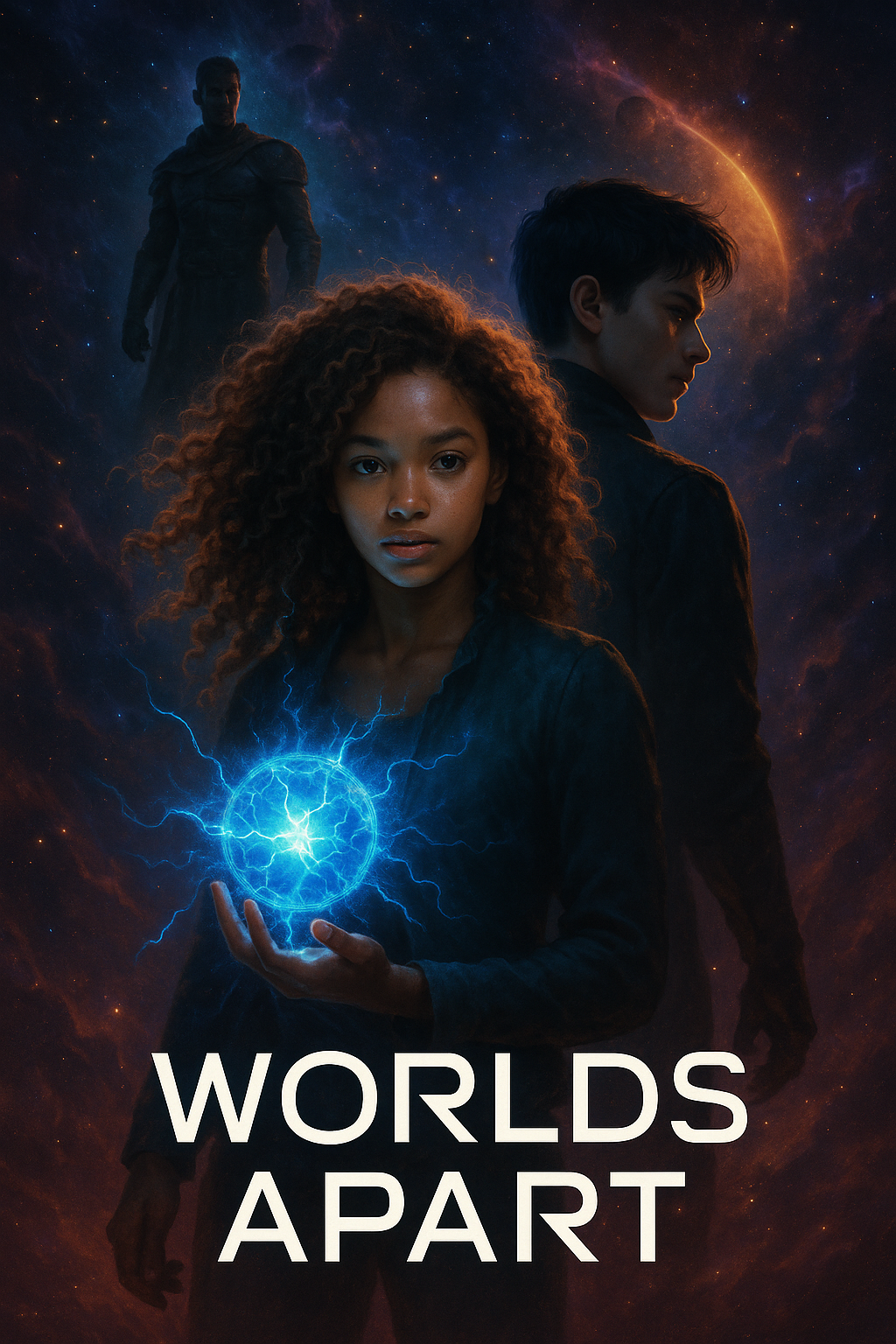
I’m pleased to announce that my Young Adult science fiction feature script, Worlds Apart, placed as a Quarterfinalist in the Outstanding Screenplays Feature Competition among a large volume of submissions from around the world. While I did not advance to the Semi-Finals in this particular competition (my TV pilot placed in a previous competition of the same name), having my work recognized in this way is a meaningful step in my screenwriting journey.

It’s always encouraging to see the worlds I build on the page resonate with readers in the industry. I’m continuing to revise and shape this story, and I look forward to sharing updates on this project as I continue to pursue opportunities.

Exciting Screenplay News!

Update: My TV pilot made it to the semi-finals.

My TV pilot The Bryant Women placed in the Quarterfinals in the Outstanding Screenplays TV Pilot Competition! This script has been a labor of love, born from my desire to showcase the magic that already exists in the underrepresented communities of my home state, South Carolina. I simply gave it a supernatural drama edge. I’m thrilled to see my work recognized among so many talented storytellers. Onward to the next round!

This was the first script I’ve ever written, but not the first time that I’ve placed in competitions for this project. I’ve made the Quarterfinals in the Santa Barbara International Screenplay Awards and Semi-Finalist in the Wiki: The World’s Fastest Screenplay Contest.

Scroll all the way down for a poster for the TV show that I hope to see go into production someday.

The Bryant Women poster

Some of Your Screenwriting Resources Are Shutting Down

In August 2025, several of your favorite screenwriting platforms and resources will no longer be available.

In the last year, I’ve entered several screenwriting competitions, mostly through the platform FilmFreeway. Recently, I’ve used Coverfly for two competitions that are currently ongoing. Today, I received a notification that Coverfly is going offline on August 1st. Meanwhile, two of the competitions I entered won’t issue the next round of announcements until after that date.

Upon further research, I found that a few other screenwriting resources will also be shutting down: ScreenCraft and The Script Lab. It sounds like the industry is looking to consolidate a lot of these competition platforms. I can appreciate that since it is often time-consuming to track competition submissions on multiple platforms.

Luckily, most of my competition entries are on the surviving competition platform FilmFreeway. However, in Reddit conversations around this topic, writers found it convenient to have all of their competition submissions and placements in one place, such as with Coverfly.

Coverfly does give users the option to export their data. It’s very easy to do, so take advantage of that option now so that you don’t lose information from competitions that you’ve entered.

What other screenwriting resources have you used that have gone away?

Creativity x Career Expertise: Use Your Professional Past to Build Your Future

If my career up to this point has taught me anything, it’s that you can and should use every bit of personal and professional experience you have toward your career path as a creative and professional writer. 

In the past, I would’ve shrugged off these experiences as part of a winding road that I hoped would make sense to a future employer whenever I was on the job hunt. Now I look at them as breadcrumbs that led me to where I’m headed now in my creative career. How did it all start?

I’ve spent the last 15+ (I stopped counting) years as a professional communicator and public affairs specialist. The core skills in this profession range from being able to write compelling content, such as press releases, articles, and briefings for the media and executives. 

Ten years ago, I received my Master of Fine Arts degree in Writing Popular Fiction, which is where I learned about writing genre fiction (sci-fi, fantasy, horror, romance, etc.) and wrote a thesis novel for the young adult audience. This experience taught me about deciding which feedback to act on from critique sessions, working with professional author mentors, and pitching to the publishing industry. 

After graduation, I also worked with my alumni association on our annual writing workshop as the guest liaison, where I invited authors, literary agents, and editors to participate. I also personally guided them on the cozy Hogwarts-style campus and throughout their stay in our sleepy college town.

I was surprised by how approachable and willing many of these professionals were when it came down to giving back to the writing community. Some of them offered to read the workshop participants’ manuscripts, and many simply listened to their pitches and provided feedback. Some people got representation from their novels, but many of the participants simply appreciated the opportunity to pitch in a friendly setting as opposed to a big conference. 

I’ve had rich cross-cultural experiences that expanded my knowledge of various cultures. I studied abroad in Russia, taught English in Japan, and worked with New Zealanders and Maori for a few years as a public affairs and events manager. 

There is a depth of knowledge about the language and cultures that I wouldn’t have known by just Googling for information. I feel so fortunate to have had these opportunities to make some deep and enriching connections with the people that I worked with. Some of them are still lifelong friends.

In the last year, I’ve been preparing myself for a new career as a screenwriter in the film and television industry. I’ve taken screenwriting classes, written two screenplays for TV and film, and entered contests. 

Looking at all of these experiences, you might think that they have zero connection to each other, but that’s not true. I’m the connection. I have to see how I can use my international, education, cultural, and communications background to serve me going forward. 

Here are some tips and takeaways that I think might be helpful to you too:

  • Never turn down an opportunity to expand your skills. Does the job as a telemarketer sound like a drag? Maybe it’s actually preparing you for pitching your book to the publishing industry.
  • Don’t be so rigid in your professional aspirations that you only take jobs that are safe. This one is pretty self-explanatory, but if you’re a professional communicator and don’t dip your toes into the “dark side” of marketing, you might be missing out. While these two career paths might require similar skillsets, the approaches to reaching audiences are quite different. Marketing skills is yet another way to pitch your stories, products, or ideas.
  • Take on volunteer or internship positions to break into your new industry. If someone doesn’t want to hire you because you don’t have years of experience or education in a certain area, take on roles that are lower barrier to entry, e.g. unpaid or part-time paid positions. 

How has it been going for me so far? Pretty good. I’ve placed in a few of the screenplay contests that I’ve entered, but no monetary rewards thus far, just the joy of knowing that I did that! 

I’ve published three short stories in anthologies in the last two years and got paid a small amount for one of the publishing contracts. I would’ve published more, but that’s just because I haven’t submitted stories in a while. Right now, I’m just focused on submitting screenplays over short stories, but I’ll get back to it! Imagine how much I can accomplish if I put all of my energy into it. 

The moral of the story is that you truly should be mining your experiences for how you can apply what you’ve learned in your personal and professional life to your new career path. Make a simple tree of knowledge to show the experience and compare it to what is needed to enter the industry that you’re interested in.

My tree of knowledge might look like me using my communications skills to write blogs and articles about my writing projects and promoting it on social media and podcasts. It might mean that I don’t have to pay someone to do these things, which ultimately saves me money.

It might also look like me using my media pitching skills to pitch my novel and screenplays to agents and managers. The sky is truly the limit. 

So, don’t see your past as a maze of bill-paying jobs, see them as the building blocks to your future. Best of luck to you!

My Screenwriting Journey: Examining Book to Screen Projects

Recently, I’ve expanded my writing journey from genre fiction for publication to screenwriting. I’ve been watching books to TV and film projects in hopes of unpacking the characterization in print form to screenplay format. 

Being a speculative fiction writer, I’ve chosen to examine Stephen King’s books to film, Vampire Diaries, True Blood, and obviously I’ll expand into literary fiction to film projects eventually. I’m picking the low-hanging fruit first so that I don’t mire myself in symbolism and other literary devices. 

The aforementioned content has enjoyed a second life on streaming recently and confirmed that even the current generation finds pleasure in popular (genre) fiction. Final Girl Jamie Lee Curtis winning an Oscar for Best Supporting Actress in 2023 was actually a celebration of genre films and fiction. I’m sure I am not alone in that sentiment, but I digress.

When you’re writing a story, you get to build your world in solitude, and only after you’ve completed your first and sometimes second draft, you come up for air and ask your community, “Is this ready for submission?” It’s a sensitive early stage of creation that you eventually grow thick skin to handle rejections early on in your writing career, but the collaborative nature isn’t nearly as dynamic as TV and film production. You’re either accepted or rejected and if you’re accepted, you’re only responsible for addressing the editor’s notes and promotion of your work after publication.

I’ve brought my fiction writing skillset over to the screenwriting ideation process: brainstorming, outlining, and drafting the manuscript. My ideas almost always come from dreams that are like little films in my mind while I slumber. Then I’m ready to pluck the idea and set my mind to shaping the idea into a story that readers might enjoy.

Going through this process, I’m finding that screenwriting requires the ability to set up characters, conflict, context, and tone to tell a story in a visual and efficient way. It’s not all that different from writing a manuscript, but there’s not a lot of room for description. You’ve got to provide minimal direction to set up a scene to empower the production team with the opportunity to interpret the words on the pages. You have to give up creative control (tough for a fiction writer!) after you’ve delivered the script to the production team so that they can make the best possible creative choices. 

One of the things that I’m so impressed by throughout this examination is how everyone from the director, screenwriters, production designers, and actors all come together to execute a vision for a movie or TV series. Sometimes with books to film, the final screenwriter(s) and production team take creative license to make changes that might upset book fans, while trying to deliver engaging content that keeps the viewer watching. 

I wrote an unpublished fiction novel that I can’t wait to tackle as a TV or film script, but for some reason, I’ve held off on starting the process. I feel like I’ll relive the critique sessions in my head and the reimaging of characters, and I wonder if I’ll ruin the process or my own vision of my novel for the screen.

As a fan of my own work, will I disappoint myself? Maybe. But I realize that it’s nonsense to doubt myself because the material is already there. Going through the process of looking at books to TV/film has opened my eyes to just how much of a collaborative effort a production requires of all involved to have a unified vision. I’m deep in the writing stage of my first project and I’m loving it!

Share in the comments if you’ve recently tried your hand at writing for the screen.