Welcome Back to Derry: How the ‘IT’ Prequel Series Unravels Derry’s Dark Origins 

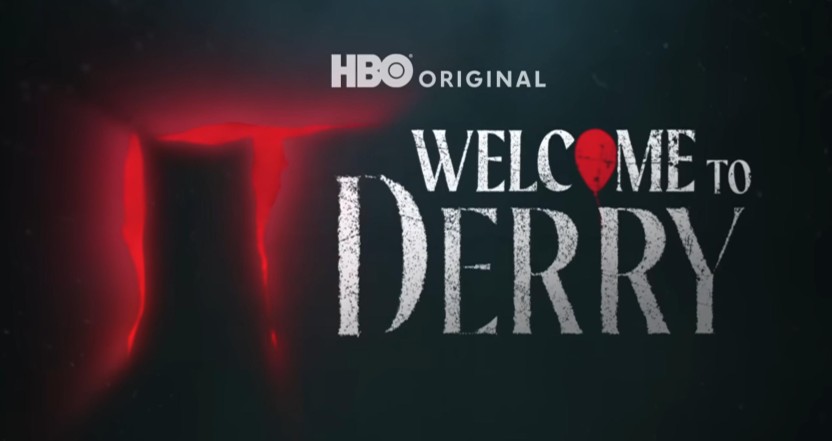
I had to give myself a few days to process the IT: Welcome to Derry TV series finale on HBOMax. As a fan of Stephen King and his Shining universe (The Shining, IT films, and Doctor Sleep), I was super excited to see that there would be a TV series so that we could spend more time exploring some of the backstory. 

I was pleasantly surprised that Bill Skarsgard came back to reprise his role as Pennywise. I’m not sure the show would survive without his quirky yet terrifying rendition of the this cosmic entity. I also thought that the TV series was a great way to answer fans’ questions about how the Shining works, learn more about Dick Holleronn’s past, and BONUS: see the ancestors of the kids who gave Pennywise an eternal sleep… or so we hope is the case.

Here’s my take on some of the elements of the series that really worked for me:

Time as a Setting

The show could’ve started anywhere on Pennywise’s 27-year cycle timeline, but they chose 1962, a period when America was undergoing significant turmoil. The Civil Rights Movement was in full swing, massive changes in society were met with racial violence, and so many other “fearful” things were happening. Pennywise feeds on fear and it makes sense that he would’ve enjoyed this era.

Welcome to Derry follows the 1962 version of The Losers Club (more on that later): Lily, Ronnie, Will, Marge and Rich. The catalyst of the show begins when a young boy disappears and his friends are violently murdered by a mutant baby in a movie theater while searching for him.  Police suspect Ronnie’s father, a Black man, of the murders, but Lily and Ronnie were there and they know that something more supernatural happened. But they can’t tell the adults because who would believe them?

Throughout the season, Ronnie’s dad is captured, escapes, and then he’s found again by a group of vigilante white male citizens of Derry that are convinced that he murdered the town’s kids. The penultimate episode features the inevitable clash between this group and Black military servicemen enjoying themselves in “The Black Spot,” a local juke joint. Pennywise shows up in the middle of the skirmish and has his big “meal” of fear after The Black Spot is set on fire with dozens of people and The Losers inside. 

Luckily, Hallorann is there and a benevolent Native American warrior spirit helps them escape the blaze but not before Pennywise gorges himself on the fear of those trying to survive the fire and the bullets. By the end of this episode, you can see exactly why the 60s was the perfect time for this New England town’s reckoning with Pennywise’s return. 

Origin Stories Beget Origin Stories

  • The TV series allowed the writers to explore some of the origins of The Losers featured in the reboot of the IT films (Chapters One and Two). By the last episode, we learn that Will is Mike Hanlon’s father; Marge (a later member of the 1962 Losers Club) is Richie Tozier’s mother and that he’s also named after Rich “the Knight” Santos; and that Ingrid is the old woman in the rebooted films who attacks adult Beverly Marsh in the IT: Chapter Two film.
  • The show also features an origin story of the Native American that trapped Pennywise on the outskirts of the town of Derry, and the weapons that could destroy him or slow him down. The shards or “pillars” come from his original cosmic star that he fell to Earth in when he first landed in what is now Derry.
  • We actually get to see just how powerful Dick Hallarann’s psychic abilities are (who we were introduced to back in The Shining film), and how much control he can exert over Pennywise through his psychic manipulation, even if for a short time. Many fans have asked for a full-on Hallorann spinoff series.
  • Welcome to Derry also shows us the original Pennywise aka Bob Gray, a clown whose identity he took on because he saw how kids (his favorite victims) responded to him like a rock star. The series has been renewed for two more seasons and it will go back further in time to 1935 and then 1908, each time when Pennywise awakens from his 27-year slumber.
  • We also learn that Pennywise perceives time differently than us mortals and he sometimes gets confused between the past, present, and future. Series showrunner, Andy Muschietti, alludes to this in interviews, so I look forward to that being a part of the lore when they go back in time in the next two seasons. 

They really packed so much into this eight-episode season, but it was very satisfying for fans of the books and the TV/film universe. We got to see how interconnected Stephen King’s universe is, while also diving deep into how a previous generation has battled him. The ending of the season was very satisfying and throughout the whole series, I felt deeply for those children and their secret battle to stay safe and sane, while the adults struggled to process who or what  Pennywise was. In the end, the kids saved the day and it’s sad to know that their offspring will face his evil once again in a future 27-year cycle. 

It’s December and I Still Think Sinners is the Best Movie of the Year

Okay, okay, I haven’t seen all of the films that are making the rounds during this year’s awards season yet, but I’ve seen quite a few of the top contenders from the IMDb Best Movies of 2025 list. Of the commercially successful films on the list, I still need to see One Battle After Another, F1 (starring Brad Pitt), and Wicked: For Good.

I still feel strongly that Sinners is the top film of 2025. It not only served horror fans a unique setting in the Mississippi Delta instead of New Orleans, but also gave us some new vampire lore to drool over (Irish vamp Remmick FTW!). The film also introduced or further endeared us to the blues and a fresh new voice in Miles Caton. And through that lens, director Ryan Coogler also educated audiences about the horrors of the Jim Crow era. 

Why is Sinners the Best?

There are so many personal reasons that I connected with this film as both a horror fan and a person of color with roots from the American South, but at the end of the day, Ryan Coogler’s direction, Michael B. Jordan as the lead playing gangster twins, and an outstanding supporting cast tipped the scales for me. 

The technical aspects of the film were also impressive, which the film industry is appreciating this awards season. Coogler’s cinematographer, Autumn Durald Arkapaw, became the first female director of photography to shoot any movie on large format IMAX film. Coogler also used “halo cameras” to film Jordan as twins, among many other techniques he used in this film.

There were also some really cool in-universe newspaper clippings revealing some backstory you can find by clicking through the Sinners Official Playlist on Spotify or by reading Gizmodo’s article. Some of the incidents include the fallout between Irish and Italian gangsters that we learn the Twins are running from in the film, and a mysterious Irish ship that washed ashore in Boston with blood-soaked decks and no one aboard.

Cultural Inclusivity

In this film, we see Native American vampire hunters, the Choctaw Nation, hunt Remmick in the beginning of the film. This short bit of screen time was so popular among fans that they started asking for a spinoff film.

Remmick is an Irish vampire who claims to Smoke that he resonates with African Americans’ suffering in order to get into the juke joint, but due to his vampire nature, it is revealed that he sought to siphon Sammie’s talent. He also leads the new vampires in a rendition of the Irish folktale song, “The Rocky Road to Dublin,” a surprisingly upbeat song and dance sequence.   

The Chinese American characters, Grace and Bo, are grocers who serve both the white and Black communities, and long-time friends of the Twins. Grace also joins the fight with the survivors of the vampire attack on the juke joint after her beloved husband is turned. 

All of these communities actually coexisted in the Mississippi Delta.

Finally, some people may not have been familiar with the concept of “passing” in the Black community prior to seeing the movie. Mary is technically considered Black in the Jim Crow laws, but because she is white-presenting, Stack believed that it was safer for her to continue passing and to have a white husband. If you’re interested in learning more about miscegenation (intermarriage between racial groups), visit the Americans All history page

In summary, Sinners ticked many boxes for me. I feel like the more people went down the rabbit hole of lore about this movie, the more they learned about life for people of color (Blacks, Chinese, Native Americans, and Irish folks by way of Remmick) during the Jim Crow South, the real horror for Black Americans. Not only that, but we got some really cool vampire lore out of it. How many genre films can you truly say accomplishes so much while also entertaining fans of horror? Not many.

I am a Judge for the FilmQuest Film Festival!

FilmQuest Film Festival official poster in collaboration with Bloody Disgusting. Artwork by @Tentaclesandteeth.

I just finished watching 17 feature films over a period of two weeks for this year’s FilmQuest Film Festival that will be held in Provo, Utah from Oct. 23-Nov. 1, 2025. 

This was my first time being a judge for a film festival, so I wasn’t sure how many films I could review in such a short time, but I made it through. 

As a longtime lover of genre films, this was a dream come true. I enjoy watching and writing genre TV, films, and fiction, so this experience gave me greater insight into the next steps after you’ve completed the project. For some filmmakers, that might look like festival submission, distribution, audience reception, and awards! Just being nominated must be something special for the film’s crew, cast, and producers.

FilmQuest is one of the top-rated genre film festivals in the world and boasts the distinction of being the #1 best reviewed film festival on FilmFreeway. If I were an independent genre filmmaker, this festival would be one of the main stops for me because I watched films that had large budgets, and some that were clearly made with heart and passion on small budgets. In this festival, they were all on the same playing field. 

Some of the genre films that I reviewed ranged from comedy musicals to gory horror to thrillers. I viewed them all and I can truly say that each one stood out in their own way. There were a handful of thought-provoking international films as well, both in English and other languages. 

Not only did I rank the films, but also nominations for other categories, such as: Best Actress, Actor, Sound, Direction, etc. I actually found this the most difficult to rank these categories because some of the nominees were good for different reasons. 

Some of the features that have stuck with me stood out for their creative story structure and pacing, out of this world plots, and some took visual storytelling to the next level. I was very pleasantly surprised by one of the comedies that made me laugh out loud (which is hard to do) and one that had a Tarantino flavor to it. I can definitely see a few of them hitting the theaters over the next year or on a streaming channel. They were just that good. 

You can find a link to all of the features and short films (which I did not judge), and other category nominees here. The festival is on its 12th run, and based on the notable actors that I saw in some of the films, you may see some familiar faces if you attend in person. Tickets are on sale on the FilmFreeway and festival website as of the writing of this blog post, but they’re selling out fast. 

Check out the 2025 Schedule to see which days you’d like to attend if you’re like me and can’t attend all of the days. There is also an option to view the films virtually if you want to get ahead of the festival and see what all of the films are about. 

It’s been such an honor to review these films and I hope that this is the first of many more opportunities in the future. Future filmmakers, screenwriters, and film lovers can participate in film festivals in other ways like volunteering. I’d love to learn more about how others stay connected to the film community.

Full disclosure, I submitted my own screenplay to this festival, but it was not selected. Being a judge was a great cancellation prize.

Monster: The Ed Gein Story

Spoilers Ahead

This past weekend, I binged all of the Monster: The Ed Gein Story episodes on Netflix. It was a tough watch, but I powered through them to see how his nefarious deeds were depicted and whether the series could offer any new perspective on his life. 

I have not been able to watch the first season that focused on Jeffrey Dahmer because I was sure it would give me nightmares afterward, which is hard to do based on my love of horror and dark fiction. So, on to my take on the show without spoiling too much.

I found episodes 1 through 6 to be very solid. We got the setup of Gein’s life while his mother was alive. He was an emotionally stunted and abused man who lived under the thumb of his ultra-religious mother who despised both women and men. In her mind, she was protecting him from the outside world by forbidding him from fraternizing with others and dating women. This, unfortunately, did not prepare him for life after her death.

So, it was no surprise that when she passed away, he could not handle being on his own without his mother’s guidance. Shortly following her funeral, he dug up a corpse from a graveyard and dressed it to resemble his mother. There were other women that he dug up and used their skin and other body parts to fashion gruesome furniture pieces like lampshades, chairs, and a skull as a bowl. Yikes!

The series explores a still unconfirmed romantic interest based on a real-life woman who claimed that she and the serial killer were close. In real life, she eventually pulled back her statements and claimed that she barely knew him, most likely to avoid being directly tied to Gein’s crimes. 

And the show delves into Gein’s imagined connections to his idols. He may have been influenced to commit some acts after reading a comic book/graphic novel about Ilse Koch, a real Nazi woman from World War II, that was accused of inflicting pain and horror on Jews and of creating equally gruesome furniture pieces similar to Gein. The show also weaved a transgender celebrity, Christine Jorgensen, into the story to reflect some of Gein’s delusions, but there is no evidence to support his fascination with her in real life. 

In the end, Gein only admitted to killing two women and digging up the bodies of several more. He’s long been rumored to have murdered his brother, a couple of hunters, and a young girl. None of these accusations led to criminal charges, but nonetheless, the series dramatizes these claims that were never proven. 

Perhaps, the most interesting B story in the first half of the series was the time spent on the Alfred Hitchcock/Anthony Perkins collaboration on Psycho, which was purposely influenced by Gein’s case. The show spent quality time on the development of the film as well as insight into Perkins’ own thoughts around his sexuality and the infamous gay therapy he went through to stay in business in Hollywood. It was a part of film history that I was not familiar with and I appreciated the side quest from the show’s heavy theme.

Warning: Creative License

Episodes 7 and 8 are where I couldn’t quite follow where the story was going. The show alludes to other serial killers that were influenced by Gein, however, in my light research, I haven’t found that to be the case. 

One particular serial killer on the show, Richard Speck, was featured as being a fan of Gein, but I found it to be a diversion, particularly the amount of minutes of screen time spent on a gratuitous prison sex scene. Whether this was one of Gein’s delusions of grandeur in real life, I’m not sure, but it was not necessarily needed to send home the message that he influenced many different aspects of society, including pop culture.

Then there was a mini crossover with Netflix’s other (now canceled) TV show about serial killers, Mindhunters, that featured another serial killer and the famed FBI agents who interviewed him. I found this thread to be more interesting to pull on if it were true, but it was not the case in reality that they met with Gein.

The last 20 minutes or so of episode 8 was filler. I actually would’ve preferred the final episode to focus on his trial where he was found to be legally insane, and to dive deeper into the psychology of Gein. Instead, we got some fictional delusions of Gein prior to his passing, which made me think it was meant to endear the audience to him. But if the purpose of the anthology is to answer the question if serial killers are born or nurtured, then it may have missed the mark. 

My take is that Ed Gein’s life was a case study in the psychological profile of how a killer was made. How someone left to their own devices without the ability to manage their emotions and mental illness (in Gein’s case, schizophrenia) becomes more than just their personal problem, but society’s problem if they become violent. Not that not everyone who is schizophrenic is violent, but it’s important to look into how these sorts of violent criminals can be detected earlier in life. 

Version 1.0.0

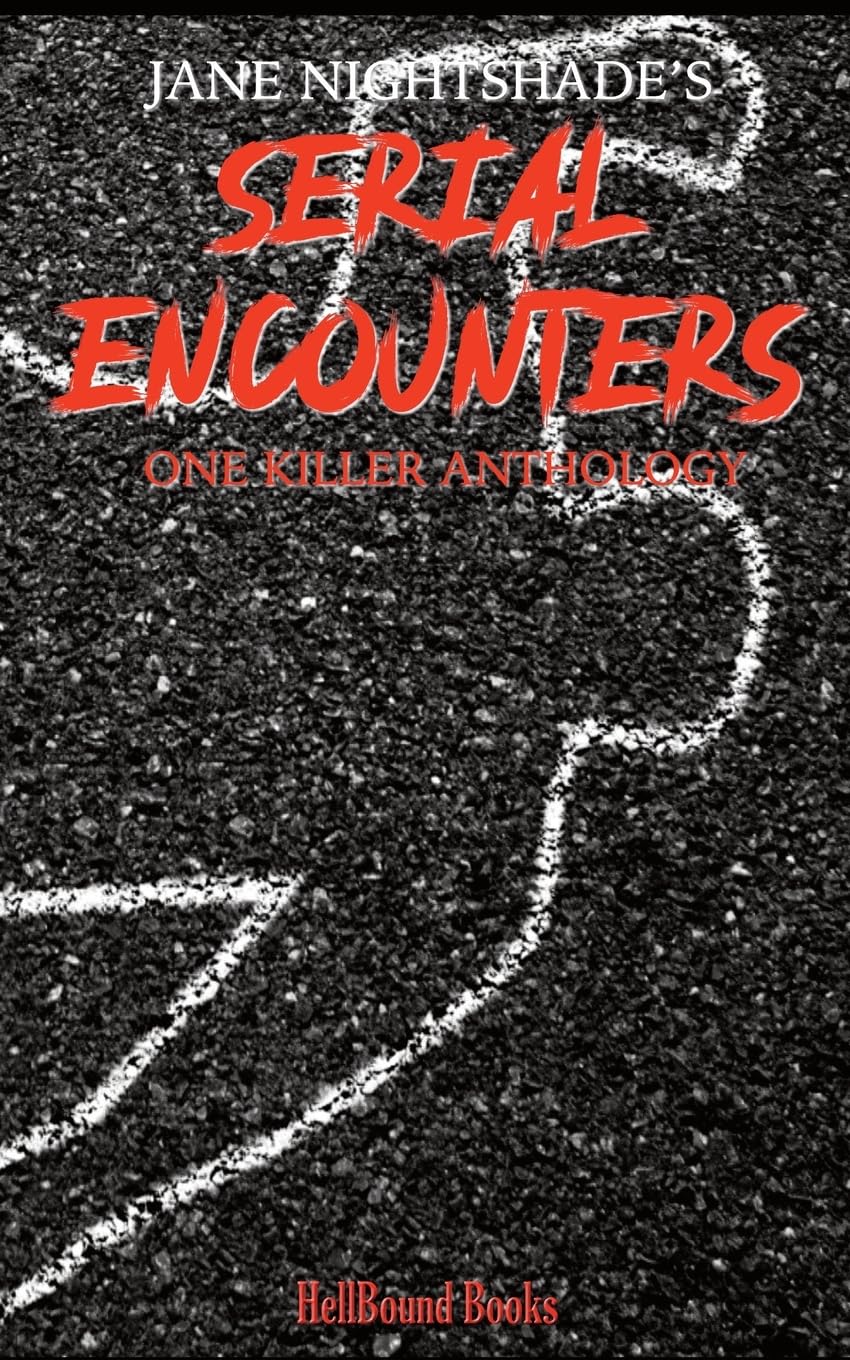
I wrote this review because I wanted to watch the show and see if the screenwriter came to similar conclusions about Gein’s disposition as I did when I wrote a short story called “The Time Killer” in the horror anthology, Jane Nightshade’s Serial Encounters.

I was assigned by the editor to write about a fictional encounter with Ed Gein. I did not have a lot of background on him at the time, but I quickly understood how he influenced many other pop culture films and shocked the nation with his gruesome killings and pastimes. There was a sadness and loneliness there that I think came across in my own story similar to the show, and I too gave him a romantic interest to explore those themes in his life. I was pleased to see that the screenwriter found that to be an interesting way to reflect how the world saw him versus how he saw himself.

In any case, check out the series on Netflix if you can stomach it and check out my story in the aforementioned horror anthology and let me know what you think in the comments.

Halloween Hidden Gems: Underrated Movies & TV Shows

It’s Halloween season again and I’m sifting through the titles so you don’t have to. Check out some of these Halloween hidden gems that you should check out by category.

Elevated Horror

Gretel & Hansel (2020): You may have missed this one because it came out during the pandemic, but it definitely deserves a hidden gem nod. Directed by quirky horror director, Oz Perkins (Longlegs and The Monkey), this film gives me the vibes of the 2015 film The Witch: atmospheric, dark and moody, oppressive family life, and eldest daughter energy. If The Witch is categorized as elevated horror, this one reaches that level, but relies more on style, composition, and pregnant pauses to increase the tension. 

The film is self-aware enough to stick to the well-trodden beats of its roots, but bold enough to ante up the slow-burn creepiness. I do see Perkins as experimenting with the atmosphere and pacing of the film, but hardcore horror fans might be put off by the scarcity of classic conventions of the horror genre. Magic and supernatural unease are present, but you might miss it between the charm of the witch and the wide-eyed awe of the protagonist, Gretel. The film is, after all, based on a classic German fairytale, and given that the original stories were dark, it was common for those times. 

Despite the setting’s era, Gretel & Hansel’s peril reflects the dark times right now. Where children aren’t safe at school or to play in the streets in the daylight, much less at night. And these two siblings certainly weren’t safe even under the roof of their own mother’s home in the first place. It felt less like a cautionary tale and more like an exploration of Gretel’s own power that she longs to wield, but burdened by her station in life and the care for her little brother. 

Last but not least, Alice Krige is terrifying as the witch, Holda. Whoever styled her costume and makeup did an excellent job of blurring the line between charming grandmother and evil crone. I highly recommend the film if you’re looking for a moody horror flick. 

Bonus: Pay close attention to the music in the film. It really complements the mood and would be a great addition to a Halloween gathering as spooky ambient music.

Here are some other films to check out from the horror genre mashup movies: 

Psychological Horror

Heretic (2024): I was immediately intrigued by the premise of this story and the fact that Hugh Grant plays the lead in a genre I’m not sure I’ve seen him in before. It drew me in even more because I dived in without any kind of prep, reviews, or hype. The story goes: Two young female missionaries visit the house of a hermit (Grant). Eager to discuss their faith with the skeptical man, they soon realize that their visit takes an unsettling turn. It’s a great example of “contained horror,” as the setting is the home they visit and there are only three main characters.  

Foreign

The Oddity (2024, Ireland): Instead of writing a review so that you can enjoy the ending, here is my version of the logline instead: A blind medium haunted by grief over her twin sister’s murder, revisits the crime scene with her golem, only to discover the truth was right under her nose. Go in blind (wink) and you won’t regret it.

Horror TV

Van Helsing (2016-2021): The show follows Vanessa Van Helsing, an enigmatic patient who wakes up from a years-long coma in the middle of a post-apocalyptic world overrun by vampires. She’s got one main mission: to find her daughter who was kidnapped before she fell into a coma. The survivors have a different plan for her: using her unique blood qualities that turn vampires back into humans. Kelly Overton does an amazing job of giving the female descendent of Abraham Van Helsing her own agency. She’s badass and she kicks vampire butt, but she’s also loyal and she’s got a heart of gold for those who follow her. Overton’s Van Helsing navigates betrayals, vengeance, but most importantly, her struggles to hold up the mantle of being humanity’s last hope. 

Black Summer (2019-2021, Netflix): I know, we’ve seen every kind of zombie concept there is, but this Z Nation spinoff is well worth the watch. And don’t worry if you haven’t seen that show because I haven’t either and I still enjoyed it. The show follows the protagonist, Rose, and her journey to find her daughter in a brutal world of a zombie apocalypse. The series starts out slow with Rose evolving from a helpless victim to a certified survivor and eventually zombie slayer. Stick with it through the second season, because that’s when it gets really good. The show is less about the zombies they’re facing and more about the inhumane humans Rose frequently rolls with to achieve her mission of finding her daughter. Not enough people watched it, but this one is definitely a hidden gem as far as TV goes. 

Lovecraft Country (2020, HBO): Don’t let the title fool you. While the TV series borrows some of Lovecraft’s monsters, the setting is very much a historical fantasy against the backdrop of racism of the deep south. The TV series follows a group of young Chicagoans on a roadtrip in search of the protagonist’s father who has gone missing in Jim Crow South. For those who have seen Green Book, you’ve seen a glimpse into the perils of traveling while black in the South at that time. But throw in a little magic, mystery, monsters, and mayhem, and you’ve got a recipe for success. I personally love how casually some of the monsters, human and inhuman, are introduced. Some episodes explore different aspects of the genre through the lens of racism: body horror, magical inheritance, possession, and even dabbles in afrofuturism. This show is worth the wild ride. You’ll never know quite where you’ll be taken next in each episode, but it’s interesting to see how they all come together in the end. Season one left off with the potential for more, but the show was cancelled. That’s okay because it absolutely works as a standalone season.  

Share your Halloween hidden gems in the comments.

Why Are So Many Films Being Rebooted?

Ahh, nostalgia. In Japanese, the word is “natsukashii” – a bittersweet longing for something familiar. The feeling of well-worn boots signaling autumn or rewatching your favorite 80s action flick. These feelings, now more than ever, have inspired a wave of TV and film remakes from the 80s, 90s, and early 2000s set to hit screens over the next year. 

The Nostalgia Factor

My guess? People are longing for the days when politics weren’t so front and center, diving deeper into their pathos of distraction and farther away from reality that seems increasingly overwhelming. The target audience seems to be Gen X, Xennials, and Millennials because those are the shows and films being greenlit today.

But these aren’t just remakes, they’re remakes of the remakes or reimaginings of familiar material. Many are even based on classic novels or earlier TV shows, doubling down on the built-in audiences that come with beloved characters.

Maybe this is part of a collective desire to return to a time when technology was exciting but not all-consuming. When we still had one foot in the analog world that felt simpler. When kids played safely outside, read comic books, and played board games instead of being glued to video games and social media.

What’s Being Remade

But I digress. Here’s a list of TV and film remakes, long-awaited sequels, and reimaginings making a comeback:

  • Tron (1982, 2010, and now 2025)
  • Gremlins 3 (sequel to the beloved ‘80/’90s franchise)
  • Freakier Friday (sequel to the 2003 film)
  • I Know What You Did Last Summer (a sequel to the 1997 original based on a book; the franchise also spawned a 2020s TV series)
  • War of the Worlds (1953, 2005 and 2025, just to name a few)
  • Blade (a reboot of the Wesley Snipes-led vampire hunter films. I’m not mad at this one at all.)
  • Fantastic Four (2005, 2015 and now 2025)
  • IT (the Stephen King horror classic has already been rebooted, but a new TV series is on the way)

Why Now?

So what’s driving this flood of reboots and remakes? What does it say about the TV and film industry as a whole? 

According to a 2024 Nielsen report, 62% of streaming viewers rewatch older content at least monthly. In 2022, over 50% of major studio releases were sequels, reboots, or part of an existing franchise.

As household budgets tighten, it might feel safer to produce films with built-in audiences to help ensure people return to the theaters. Maybe these generations crave the comfort of films they already know.

I don’t have the answers, but I wonder: Has anyone in the industry admitted to using this strategy? 

If it is indeed intentional, then the jury is still out on whether it’s going to be a winning strategy. We’ve seen some remakes flop, while others succeed.

Drop your thoughts in the comments.

Some of Your Screenwriting Resources Are Shutting Down

In August 2025, several of your favorite screenwriting platforms and resources will no longer be available.

In the last year, I’ve entered several screenwriting competitions, mostly through the platform FilmFreeway. Recently, I’ve used Coverfly for two competitions that are currently ongoing. Today, I received a notification that Coverfly is going offline on August 1st. Meanwhile, two of the competitions I entered won’t issue the next round of announcements until after that date.

Upon further research, I found that a few other screenwriting resources will also be shutting down: ScreenCraft and The Script Lab. It sounds like the industry is looking to consolidate a lot of these competition platforms. I can appreciate that since it is often time-consuming to track competition submissions on multiple platforms.

Luckily, most of my competition entries are on the surviving competition platform FilmFreeway. However, in Reddit conversations around this topic, writers found it convenient to have all of their competition submissions and placements in one place, such as with Coverfly.

Coverfly does give users the option to export their data. It’s very easy to do, so take advantage of that option now so that you don’t lose information from competitions that you’ve entered.

What other screenwriting resources have you used that have gone away?

Hollywood Field Trip, May 2025

This May, I participated in Story Summit’s Hollywood Field Trip in Los Angeles—a thoughtfully curated experience that brought together aspiring screenwriters, affectionately known as The Write Stuff, from across the U.S., Scotland, Australia, and Canada. The program was organized by David Kirkpatrick, founder of Story Summit and former president of Paramount Pictures, along with his incredible support team.

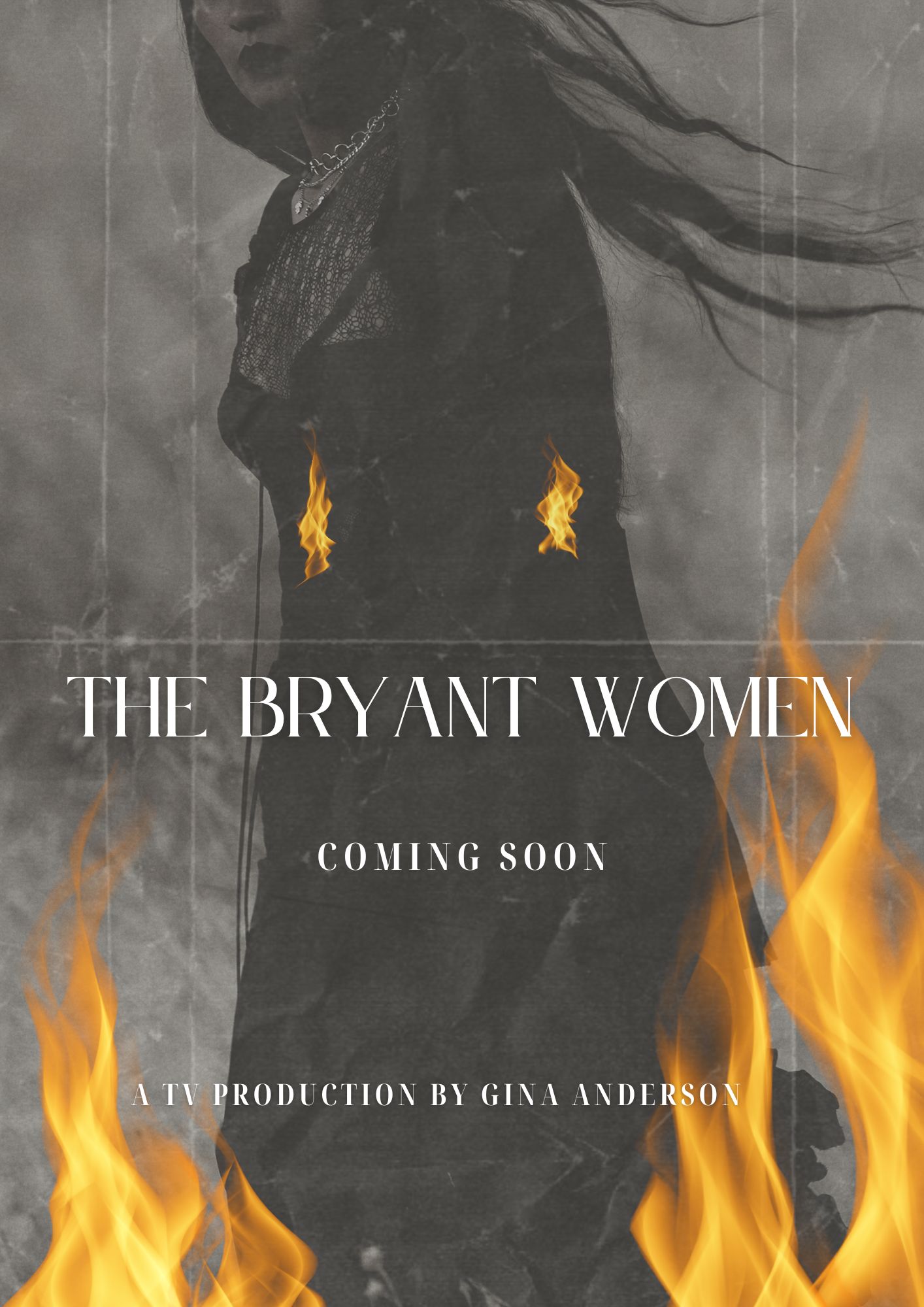
As I prepare to transition into a new industry, I’ve taken screenwriting classes and immersed myself in researching the world of TV and film. So when this program came across my radar, I jumped at the opportunity. I began my screenwriting journey last year with a supernatural drama TV pilot called The Bryant Women. I submitted it to a few smaller contests and was thrilled when it earned some placements. This year, I adapted my unpublished young adult science fantasy novel, Worlds Apart, into a feature-length screenplay.

The weeklong program included a behind-the-scenes tour of Paramount Studios, a visit to the Academy Museum of Motion Pictures, and a Pitch Fest with agents and managers. I connected with so many incredible up-and-coming screenwriters, as well as professionals already working in the TV and film industry—many of whom are authors eager to see their books adapted for the big screen.

I’m going old-school and blogging about the experience. Come along for the ride—read to the end, leave a comment, and don’t forget to like my Facebook author page!

Day 1: Meet + Greet + Words of Wisdom

Day 1 was a travel day for many of us, and we checked into the historic Hollywood Roosevelt Hotel. Although we had met virtually before arriving, it was such a treat to get dressed up and finally connect in person at the Welcome Reception, hosted by David Kirkpatrick.

David brought along his friend Gary Lucchesi, President Emeritus of the Producers Guild. Mr. Lucchesi shared some inspiring words as we embarked on our journeys as screenwriters. He told us how he started out in the mailroom and worked his way up in the industry. Stories like his are always refreshing—and a powerful reminder that everyone starts somewhere.

Day 2: Paramount Studios VIP Studio Lot Tour

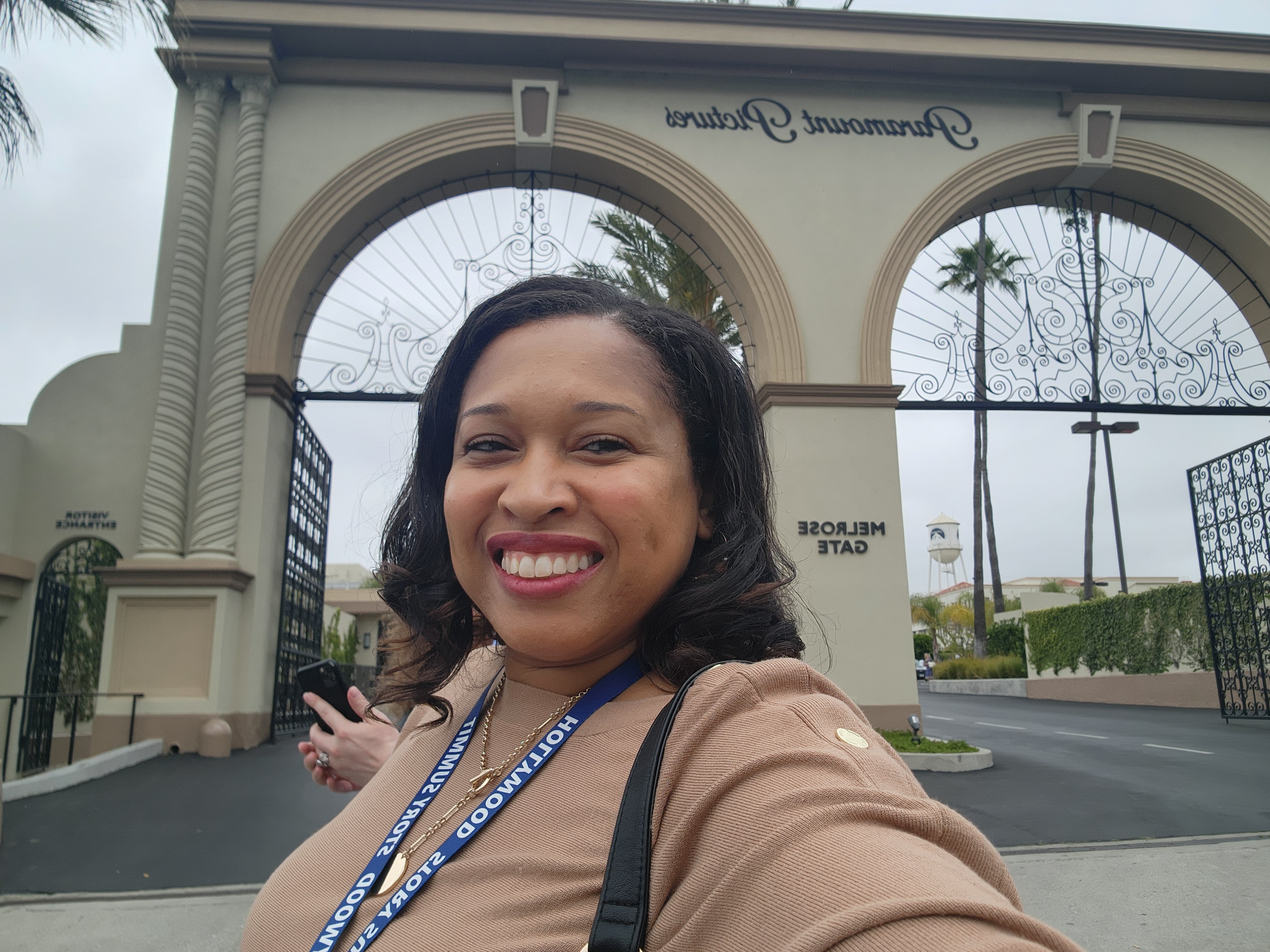
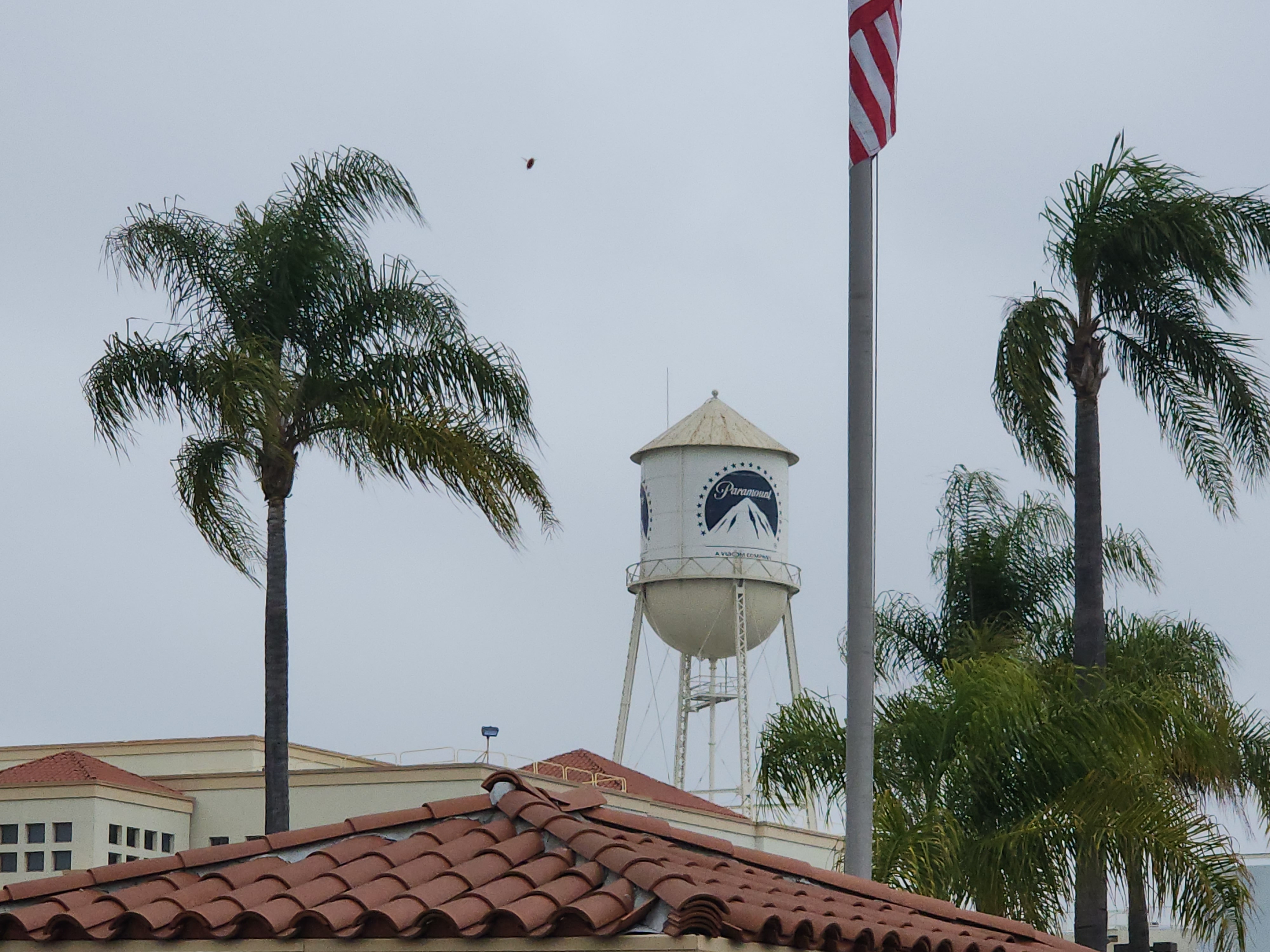
Given David Kirkpatrick’s deep history and connection to Paramount Studios, we got special acccess to see behind the iconic gates of Paramount and dive into 100+ years of Hollywood magic. We got to see legendary movie props, sets, and original films in the Archive and Backlot Operations Departments. Paramount Studios was my favorite highlight of the field trip. If those studio grounds could talk!

Don’t mind me, I’m just enjoying traveling through time and space in this Star Trek Beyond set piece.
Helmet from Top Gun: Maverick

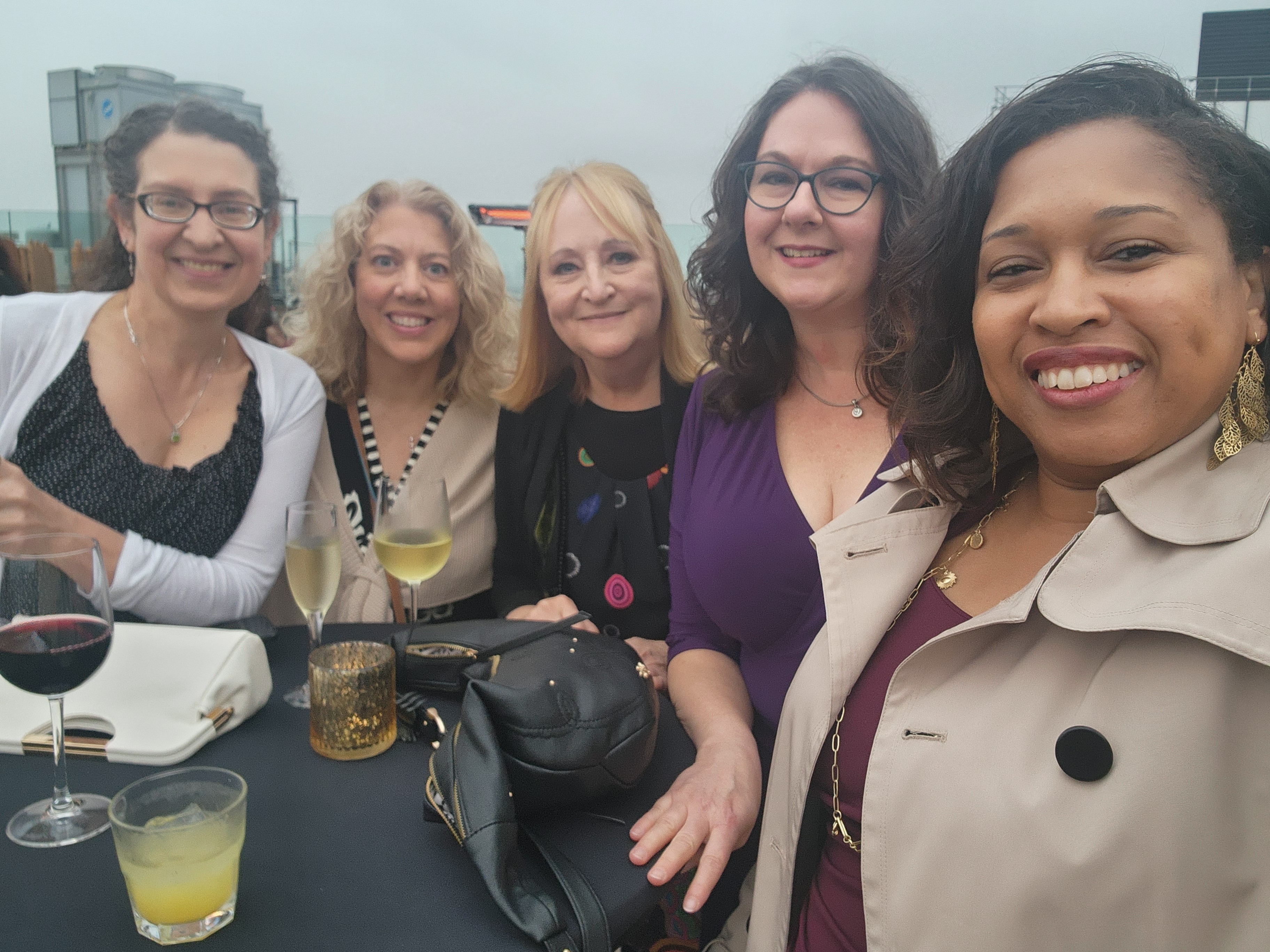
We ended the evening on the rooftop of the hotel right beneath the suite where Marilyn Monroe once lived at the Hollywood Roosevelt. We could see Hollywood Boulevard, TCL Chinese Theatre, and the Hollywood sign from up there. The evening was magical and I had the opportunity to learn more about my group’s screenplay projects.

Me and my fabulous screenwriting sisters enjoying ourselves and practicing our pitches on the rooftop.

Day 3: Pitch Fest + Academy Museum Visit

On the morning of our Pitch Fest, I did my best to calm my nerves. After all, this could be my one shot at finding representation for my TV and film projects.

Each of us had just 10 minutes to pitch to the agents and managers in attendance. I met with three agents, most of whom were primarily looking for feature film projects. It seems TV is a tougher sell at the moment.

Still, I was able to pitch my TV project—which is my most developed—to a couple of them, so we’ll see if anything comes of it. I also realized that the world-building in my feature film project is pretty complex to convey in such a short pitch, so I’ll be exploring how to best present that one moving forward.

The Pitch Fest was a great opportunity to get a sense of what sparks interest among Hollywood reps. I’m proud of myself for putting my work out there and stepping into the arena.

Pitch Fest!
A girl can dream. Let’s pray this bad girl gets produced in real life. You guys would love it!

The second half of the day was much more relaxing. Many of us were still processing the responses from the agents and managers to our pitches. When you spend days, months, and years dreaming about such an opportunity, you do your best and then it’s over in no time.

Academy Museum of Motion Pictures

Next, we visited the Academy Museum of Motion Pictures. I had originally planned to visit back in January, but that trip was canceled due to wildfires. This time, I was thrilled that the museum visit was included as part of our program—and even more excited to experience it purely for pleasure rather than work.

When you think about it, film and television are just a little over 100 years old, yet look at how far we’ve come—in technology, genre, creativity, and the countless ways we’ve learned to express ourselves through this medium.

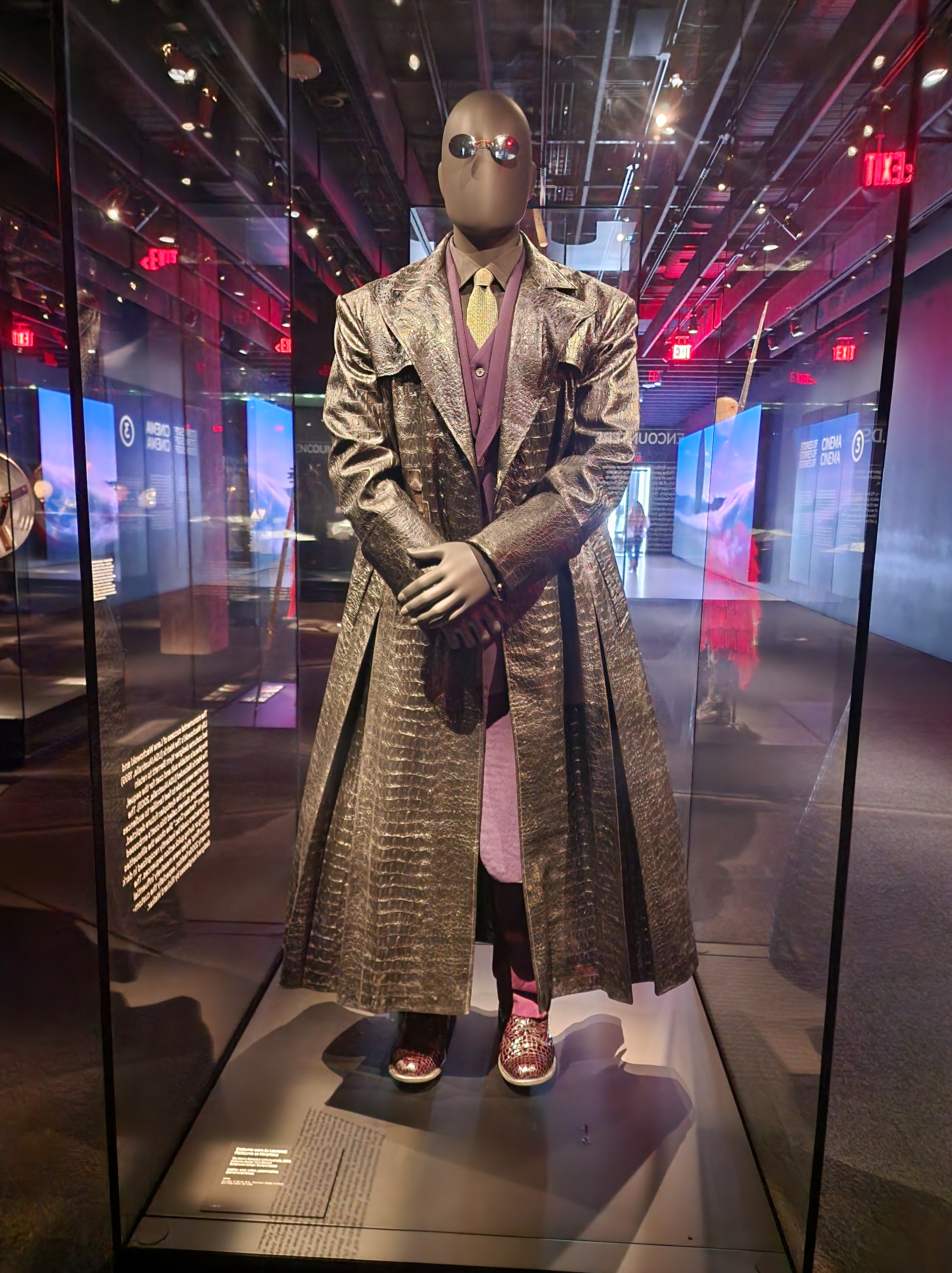
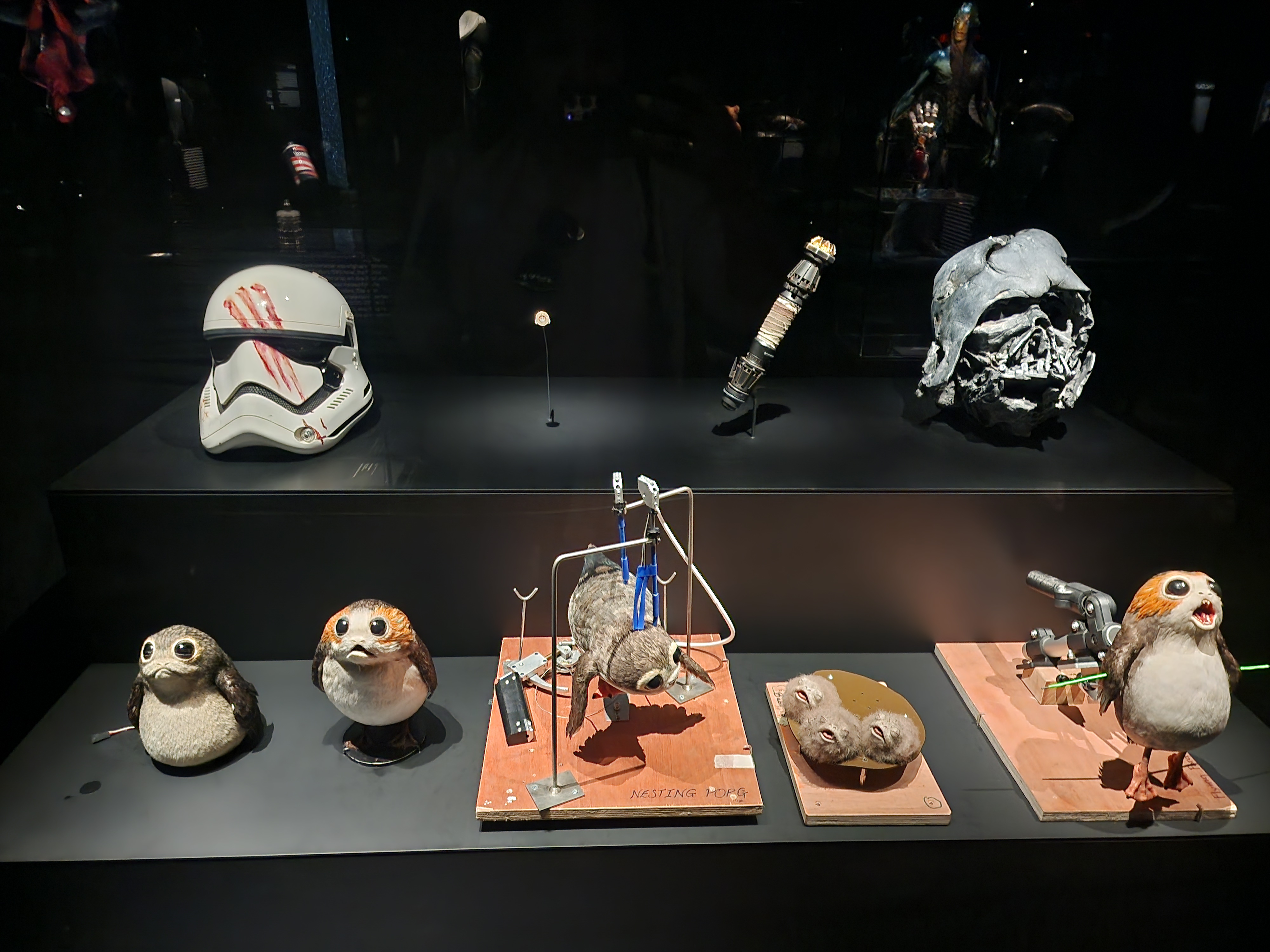
I was in awe learning how some of our favorite films were made. I highly recommend a visit to this museum—you’ll want to give yourself at least 2 to 3 hours to take it all in.

Barbie and Ken’s outfits from the feature film.
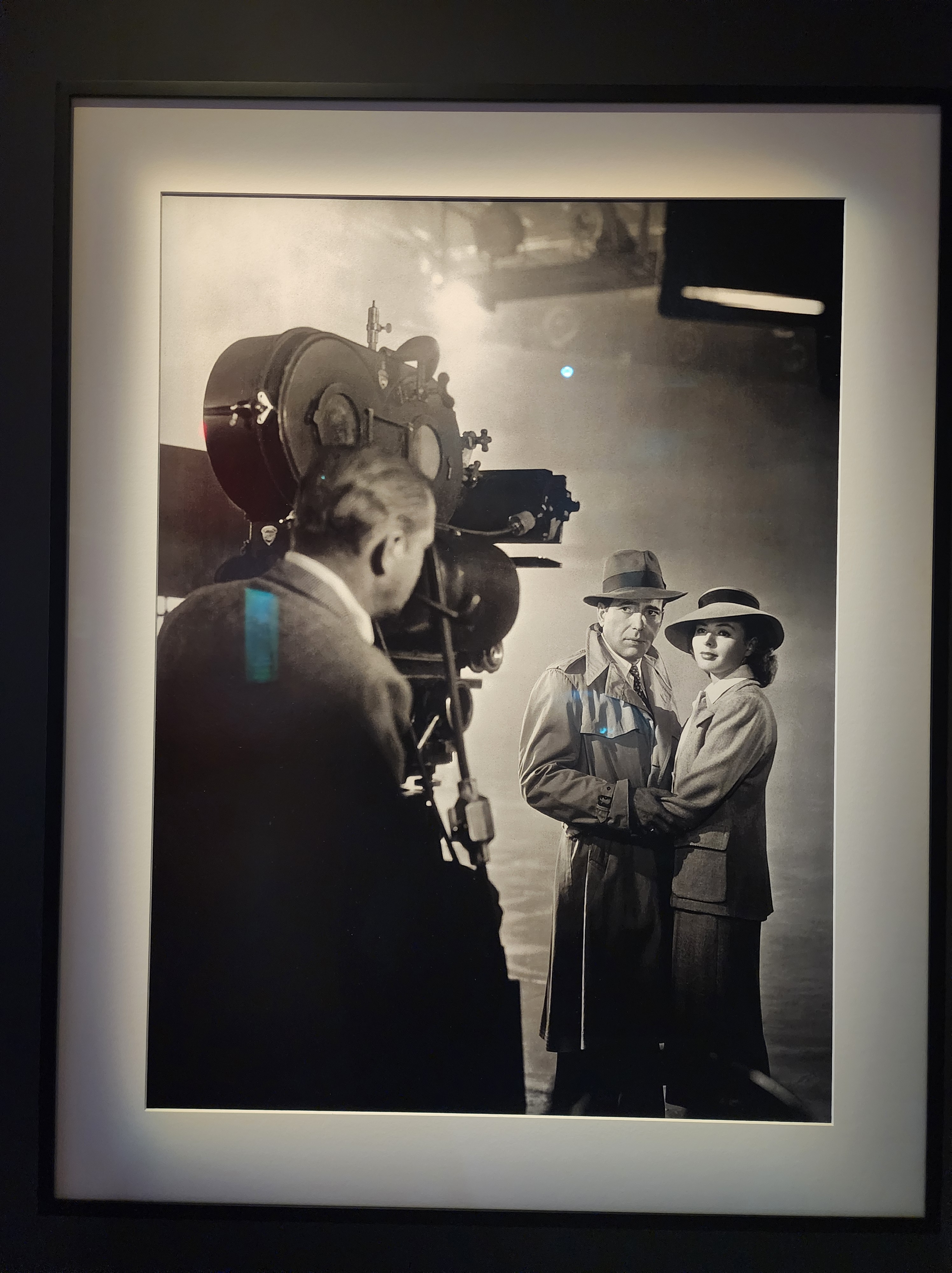
Humphrey Bogart, my grandmother’s favorite actor, and Ingrid Bergman in Casablanca.

We ended Day 3 with a cozy night in for Classic Cinema Night at the Cinegrill, located in the Hollywood Roosevelt. We watched the 1950s classic All About Eve, starring Bette Davis, Anne Baxter, and a young, up-and-coming Marilyn Monroe.

It was fascinating to see Monroe in a small role early in her career—but even more captivating to watch Bette Davis in her prime, commanding the screen with her sharp delivery and presence.

The program had provided the script in advance, allowing us to follow along and see the words come to life on screen—a thoughtful touch that deepened the experience.

The Cinegrill entrance looks like a library of books.

Day 4: Final Day

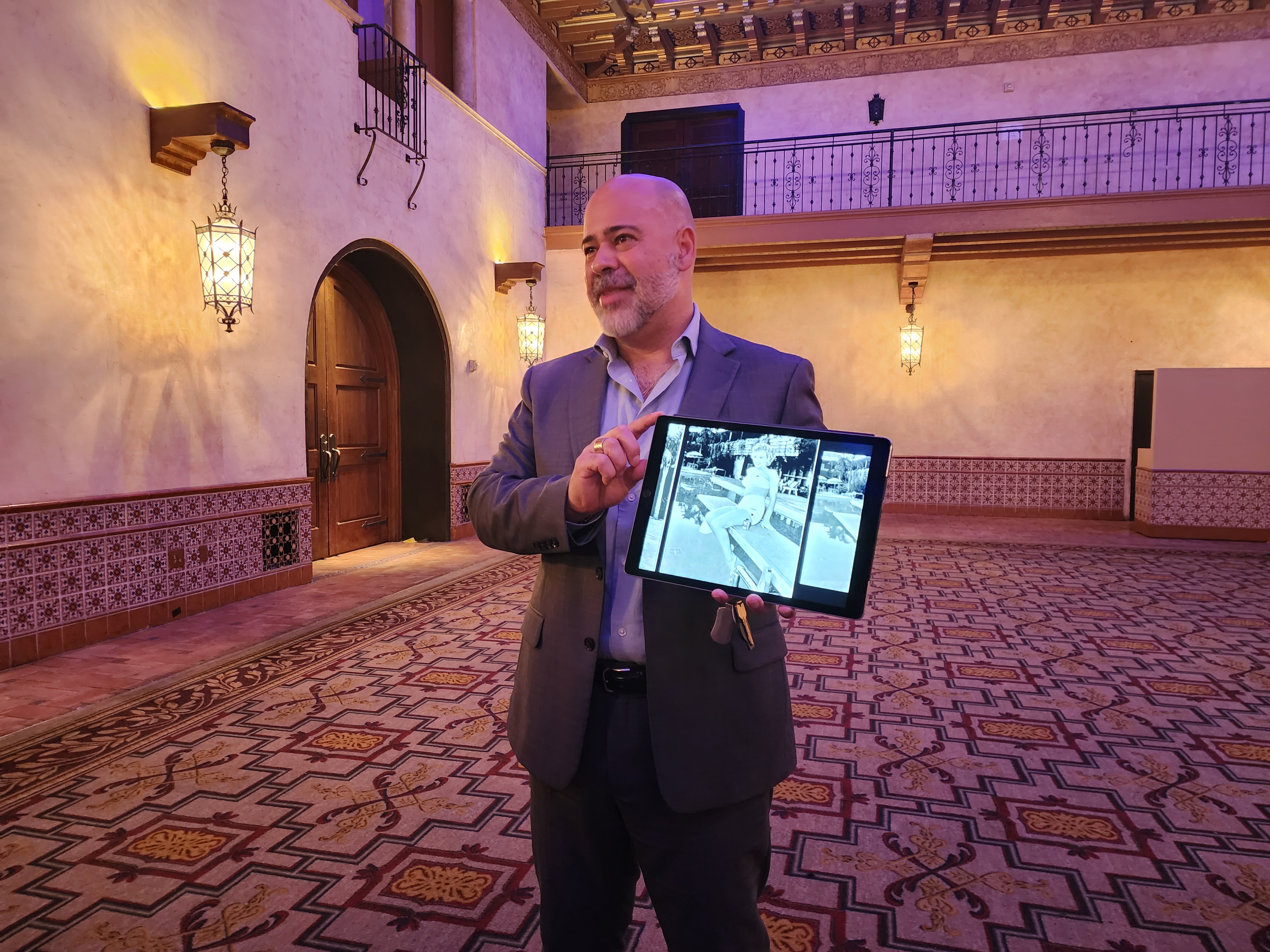
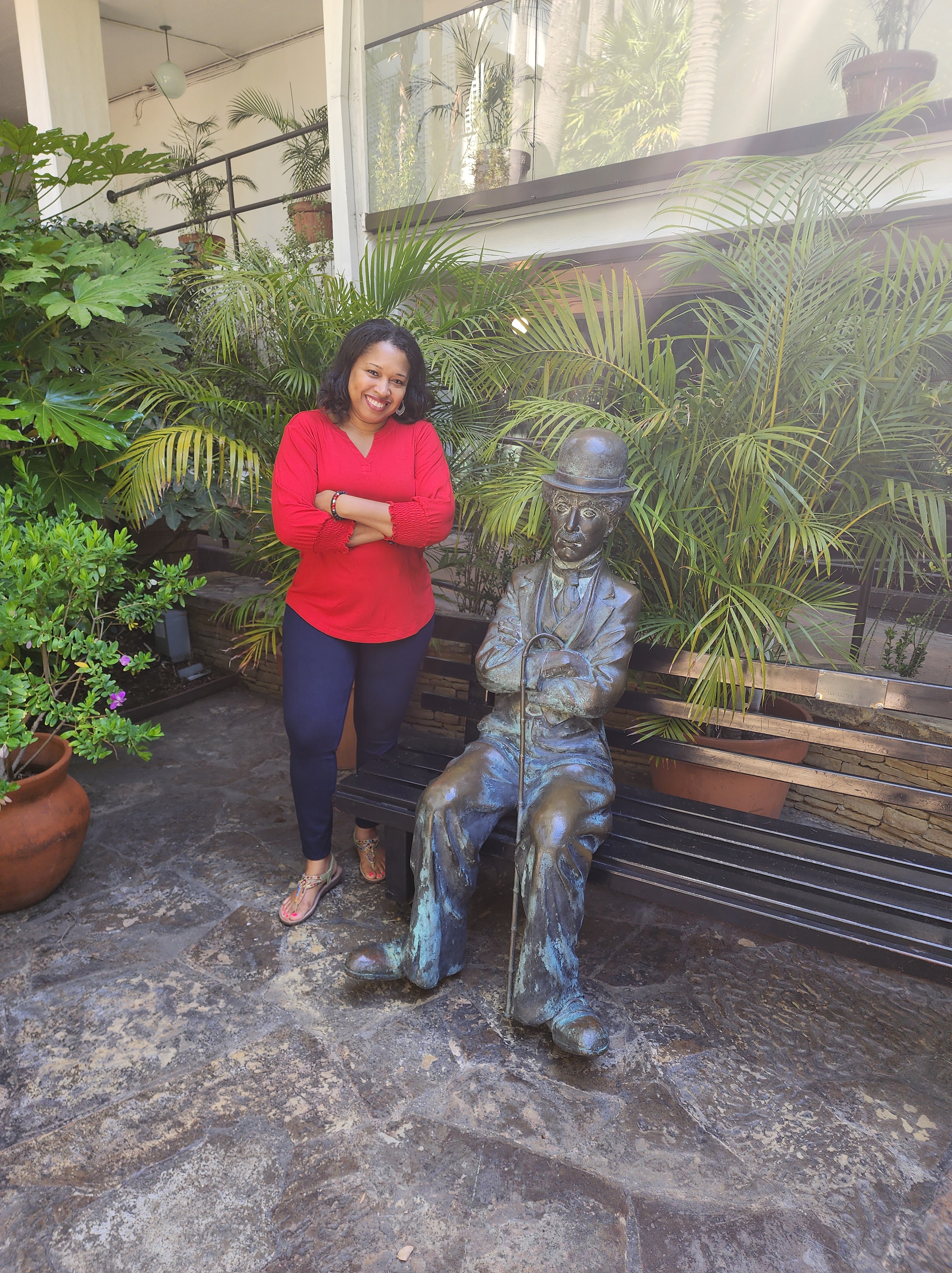
The final day of the program was very relaxed. Juan Pineda of the Hollywood Roosevelt gave us a special tour of the historic hotel. There were many stories about how the first Oscar ceremony was held there (it was less than 15 minutes!) and the famous residents like Charlie Chaplin and Marilyn Monroe.

Marilyn Monroe during one of her early photoshoots at the famous Hollywood Roosevelt Tropicana Pool.
Yes, there were ghost stories from the hotel staff. This is Marilyn Monroe’s haunted mirror.

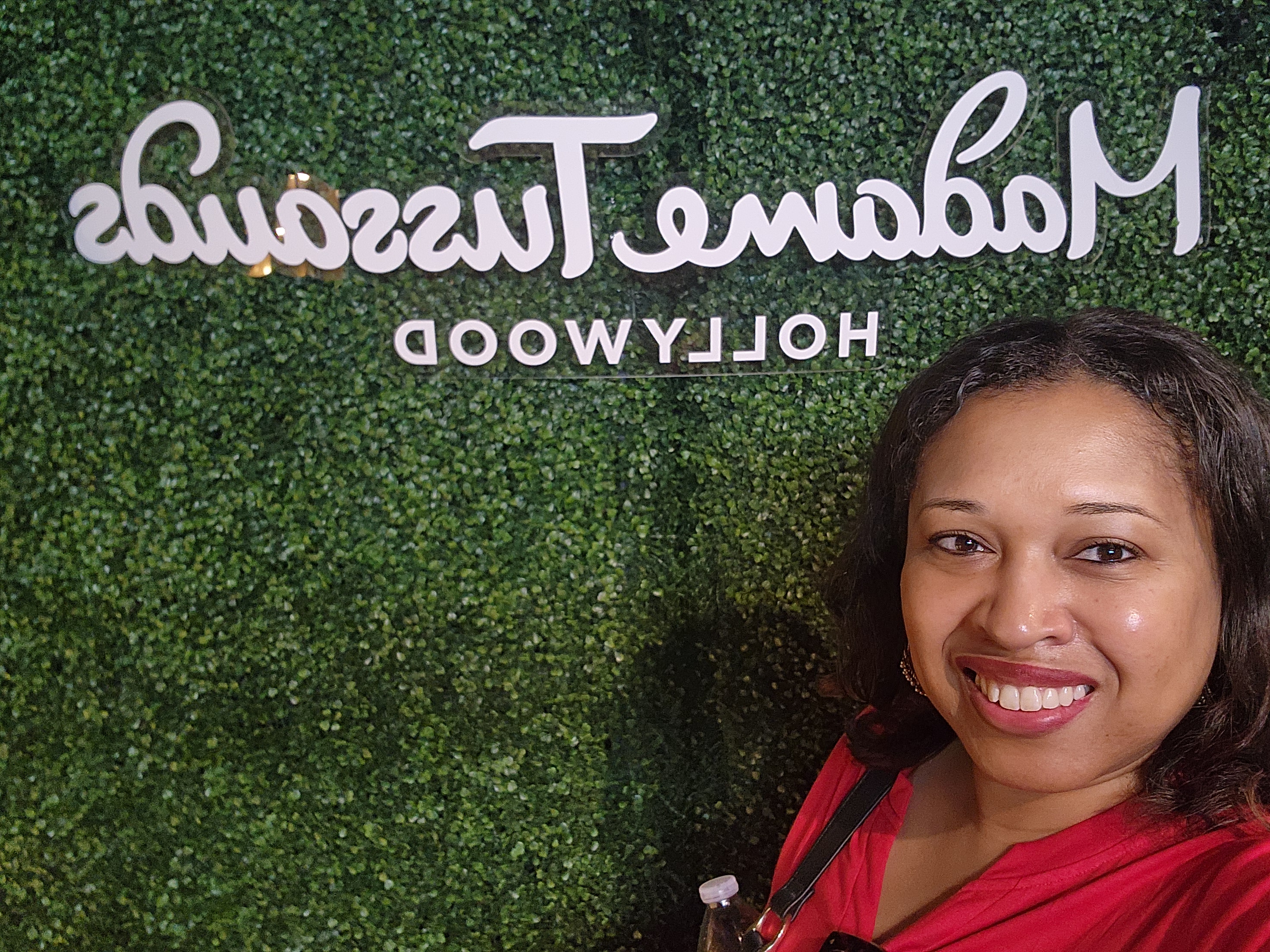
The rest of the day was free time. I spent it visiting Madame Tussauds Wax Museum, exploring the Hollywood Walk of Fame, and organizing a group viewing of Ryan Coogler’s Sinners in 4D at the TCL Chinese Theatre.

I had seen the film before, but experiencing it in 4D was something else—the moving seats and bursts of air added a whole new dimension. It felt like a pretty solid substitute for missing it in IMAX.

Seriously, you will not be prepared for how lifelike these wax statues are. It’s a little creepy!
Second time’s a charm. Team viewing of Sinners in the theatre. Loved it!

The program wrapped up with a thoughtful farewell dinner hosted by David K. We shared journal entries aloud and reflected on the incredible week we’d had—gathered together at the iconic Musso & Frank Grill, a legendary spot once frequented by classic Hollywood stars like Charlie Chaplin, Humphrey Bogart, and Marilyn Monroe.

The historic venue also served as a filming location for Once Upon a Time in Hollywood, featuring Brad Pitt and Leonardo DiCaprio in scenes directed by Quentin Tarantino.

Here is my farewell speech and I’ll leave it at that:

There are moments you dream about doing “one day”—and then there’s the moment when you’re actually living the dream. This week was that moment for me.

What I’ll never forget is the opportunity Story Summit gave us to pitch our stories—and the feeling of rising to meet that opportunity.

I did it. I sat down, wrote my screenplays, and pitched them. I did that. And I’m so proud of myself for betting on me.

I’m also deeply grateful for the community that formed around this field trip. I hope to stay connected with my fellow screenwriters as we move forward.

It felt like many of us were standing at the same crossroads in life—that do or die moment when we choose: continue as we always have, or be bold and step into a new journey as screenwriters, directors, producers, and dreamweavers.

Whether we create from scratch or help bring someone else’s vision to the screen, we won’t be the same after this experience.

We’ll always have this time—when we moved closer to the lives we’ve been dreaming of.

My Screenwriting Journey: Examining Book to Screen Projects

Recently, I’ve expanded my writing journey from genre fiction for publication to screenwriting. I’ve been watching books to TV and film projects in hopes of unpacking the characterization in print form to screenplay format. 

Being a speculative fiction writer, I’ve chosen to examine Stephen King’s books to film, Vampire Diaries, True Blood, and obviously I’ll expand into literary fiction to film projects eventually. I’m picking the low-hanging fruit first so that I don’t mire myself in symbolism and other literary devices. 

The aforementioned content has enjoyed a second life on streaming recently and confirmed that even the current generation finds pleasure in popular (genre) fiction. Final Girl Jamie Lee Curtis winning an Oscar for Best Supporting Actress in 2023 was actually a celebration of genre films and fiction. I’m sure I am not alone in that sentiment, but I digress.

When you’re writing a story, you get to build your world in solitude, and only after you’ve completed your first and sometimes second draft, you come up for air and ask your community, “Is this ready for submission?” It’s a sensitive early stage of creation that you eventually grow thick skin to handle rejections early on in your writing career, but the collaborative nature isn’t nearly as dynamic as TV and film production. You’re either accepted or rejected and if you’re accepted, you’re only responsible for addressing the editor’s notes and promotion of your work after publication.

I’ve brought my fiction writing skillset over to the screenwriting ideation process: brainstorming, outlining, and drafting the manuscript. My ideas almost always come from dreams that are like little films in my mind while I slumber. Then I’m ready to pluck the idea and set my mind to shaping the idea into a story that readers might enjoy.

Going through this process, I’m finding that screenwriting requires the ability to set up characters, conflict, context, and tone to tell a story in a visual and efficient way. It’s not all that different from writing a manuscript, but there’s not a lot of room for description. You’ve got to provide minimal direction to set up a scene to empower the production team with the opportunity to interpret the words on the pages. You have to give up creative control (tough for a fiction writer!) after you’ve delivered the script to the production team so that they can make the best possible creative choices. 

One of the things that I’m so impressed by throughout this examination is how everyone from the director, screenwriters, production designers, and actors all come together to execute a vision for a movie or TV series. Sometimes with books to film, the final screenwriter(s) and production team take creative license to make changes that might upset book fans, while trying to deliver engaging content that keeps the viewer watching. 

I wrote an unpublished fiction novel that I can’t wait to tackle as a TV or film script, but for some reason, I’ve held off on starting the process. I feel like I’ll relive the critique sessions in my head and the reimaging of characters, and I wonder if I’ll ruin the process or my own vision of my novel for the screen.

As a fan of my own work, will I disappoint myself? Maybe. But I realize that it’s nonsense to doubt myself because the material is already there. Going through the process of looking at books to TV/film has opened my eyes to just how much of a collaborative effort a production requires of all involved to have a unified vision. I’m deep in the writing stage of my first project and I’m loving it!

Share in the comments if you’ve recently tried your hand at writing for the screen.